


Time flies when you're cold and baseball-less. Somehow,Team USA's first World Baseball Classic game is just two weeks away.
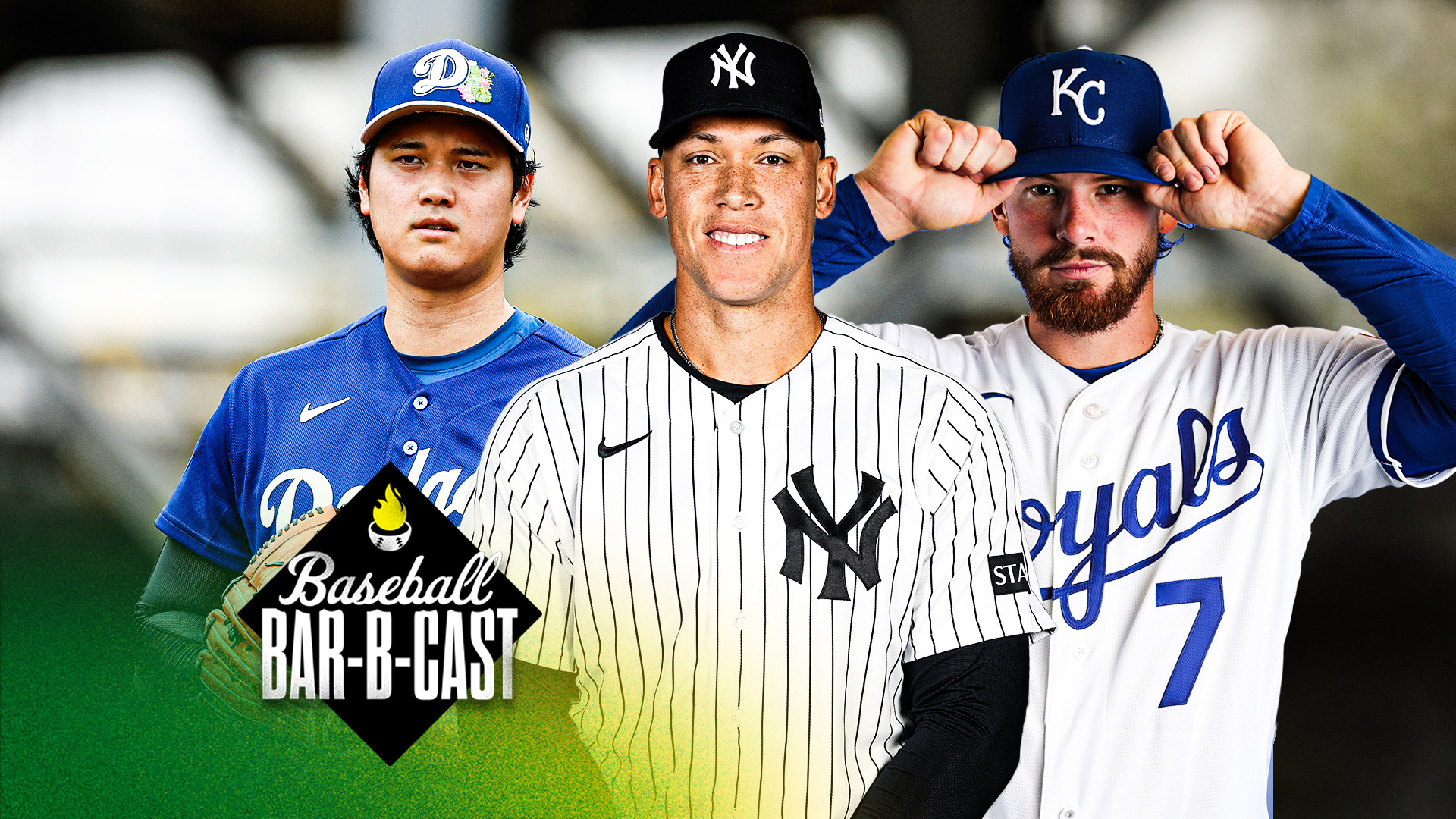
Barring injuries,the roster is fully set, with manager Mark DeRosaopting to carry 16 pitchers and 14 position players. That's a deviation from what DeRosa did in 2023, when Team USA featured 15 pitchers and 15 position players. Most likely, this tournament will be won or lost by its stars — the Judges, the Ohtanis, the Sotos — but DeRosa's roster machinations will have an impact, too, as they did last time around, when Team USA fell to Japan in the final.
With the stars and stripes assembling a comically formidable roster for the 2026 tournament, particularly on the pitching front, the pressure is very much on DeRosa to retake the title. Here are a handful of questions about Team USA's roster.
What are the biggest differences between the 2023 and 2026 Team USA rosters?
Instead of rostering a third catcher like in 2023, Team USA will enter the 2026 WBC with an eighth bulk arm, basically swapping Kyle Higashioka (2023) for Michael Wacha (2026). That makes tons of sense, as in the previous tournament, Higashioka didn't start and barely played. Cal Raleigh and Will Smith are more than capable of handling the catching duties, and Wacha isn't the most exhilarating arm, but he can cover innings out of the bullpen.
The other major adjustment DeRosa seems to have made is carrying two additional lefty-hitting bats and a switch-hitter in Raleigh. In 2023, Team USA inexplicably faced southpaw starters in six of its seven games. That's unlikely to happen again. Even so, the greater diversity in handedness should allow DeRosa to make his lineup more reliever-proof.
How will the second- and third-base alignment play out?
In 2023, Nolan Arenado started all seven of Team USA's games at the hot corner. Tim Anderson, of all people, started the final five at the keystone. Things won't be so settled at second and third in the upcoming tournament. Bobby Witt Jr., who was on the 2023 club exclusively as a pinch runner, should start every game at short. That leaves two starting spots for the quartet of Gunnar Henderson, Brice Turang, Alex Bregman and Ernie Clement.
DeRosa could go about this multiple ways. He could play both lefties (Henderson at 3B and Turang at 2B) against righty starters and both righties (Bregman at 3B and Clement at 2B) against southpaws. He could prioritize offense (Bregman at 2B and Henderson at 3B) and slot Turang in late for defense. He could lean on Turang's phenomenal glove and start him regularly at second, alternating between Bregman and Henderson at the hot corner. He could also get Witt off his feet and give Henderson the occasional start at short, the only position he has played for Baltimore since Opening Day 2024. The good news here is the Team USA manager has options, all of which are relatively reasonable.

Will having more role players lead to less lineup shuffling?
Of the 15 position players on the 2023 team, only two were used as typical substitutes: Higashioka as the rarely used third catcher and Witt as a pinch runner. Witt has since blossomed into the third-best player on Earth and will probably lead off and start at short this time. The 13 other hitters in 2023 all received multiple starts, while only four — Arenado, Mookie Betts, Mike Trout and Paul Goldschmidt — started every game.
Advertisement
There will almost certainly be more lineup continuity in 2026. That's the case for two main reasons: (1) There's one fewer hitter after DeRosa opted against a third catcher; (2) There are more role players on this team. While he might nab a start or two, Pete Crow-Armstrong figures to feature most prominently as a pinch runner and late-inning defensive replacement for Byron Buxton in center field. Goldschmidt, who turns 39 in September, is here to crush southpaws and provide veteran leadership. Clement offers versatility and splendid vibes.
In 2023, it seemed like DeRosa was trying to keep his star-studded group happy by shuffling through a carousel of players at the bottom of the lineup. Will he change that strategy this year? Given the personnel assembled, it seems like it. Witt, Bryce Harper, Aaron Judge and Roman Anthony (in for the injured Corbin Carroll) will probably start every game. Kyle Schwarber will probably do the same at DH, unless DeRosa really wants Goldschmidt in against a lefty starter.
How will the starting pitching line up?
Team USA's enormous upgrade of its pitching staff could prove to be the most consequential story of this entire tournament. The Americans will have reigning Cy Youngs Tarik Skubal and Paul Skenes leading a rotation that also includes Giants sinkerballing ace Logan Webb, Mets rookie phenom Nolan McLean and 2025 All-Star Joe Ryan.
In 2023, four different pitchers started USA's seven games. Adam Wainwright started the opener against Great Britain and the semifinal against Cuba. Nick Martinez kicked off a disastrous bullpen game against Mexico. Lance Lynn took the rock against Canada in pool play and against Venezuela in the quarters. D-backs kitchen-sinker Merrill Kelly faced Colombia in pool play and got the call against Japan in the finals. Three other traditional starters — Kyle Freeland, Miles Mikolas and Brady Singer — served in bulk roles out of the bullpen.
While the 2026 pitching plan has yet to be confirmed, let's copy and paste the 2023 strategy onto this year's group. Skenes and Skubal will almost certainly be put on schedule to start the semis and finals. That means Skenes would likely start March 9 against Mexico, and Skubal would go March 10 against Italy. Most of the top Italian hitters — Vinnie Pasquantino, Jakob Marsee, Dominic Canzone, Jac Caglianone and Miles Mastrobuoni — are left-handed, making Skubal the obvious choice there. That plan would then have Skenes start the semis on March 15 or 16 and Skubal on track for the finals on March 17. Webb and Ryan probably get the two other pool-play starts, and one of them probably starts the quarterfinals on March 13 or 14.
That leaves McLean, Wacha, Clay Holmes and Matthew Boyd available in multi-inning relief roles. In theory, DeRosa could go with McLean over Ryan for a start or give the ball to the southpaw Boyd against another lefty-heavy lineup, but the Skubal-Skenes-Webb-Ryan starting quartet makes the most sense.
Which relievers will throw the highest-leverage innings?
This is the one area on the roster that hasn't necessarily improved compared to 2023. To be clear, that's more a compliment to the previous group than a criticism of this one.
During the previous WBC, DeRosa leaned on former Astros hurler Ryan Pressly to close out three games but didn't use him in the semis or finals. David Bednar (back for 2026), Devin Williams and Jason Adam were the other "Tier A" relievers. All appeared in four of seven games. Aaron Loup was the first lefty and Adam Ottavino the No. 2 southpaw. Daniel Bard and Kendall Graveman were further down the depth chart.
In the 2026 Team USA bullpen, Bednar and Padres flamethrower Mason Miller are the only two relievers slated to close for their MLB teams this coming season. They'll be the top two dogs in the kennel. Brad Keller, Griffin Jax and Garret Whitlock make up the next tier. The two high-leverage southpaws will be Gabe Speier and Garrett Cleavinger. Future Hall of Famer Clayton Kershaw, who retired from MLB after the 2025 World Series, almost certainly won't see the mound in anything resembling a crucial moment. He's here to eat up pool-play innings against Brazil and Great Britain and generally have a good time.


