Gene-Edited Dire Wolves Brought Back from Extinction Get Their Year 2 Check-Up. Here’s What Their Exams RevealedMoná ThomasFri, October 16, 2026 at 9:06 PM UTC

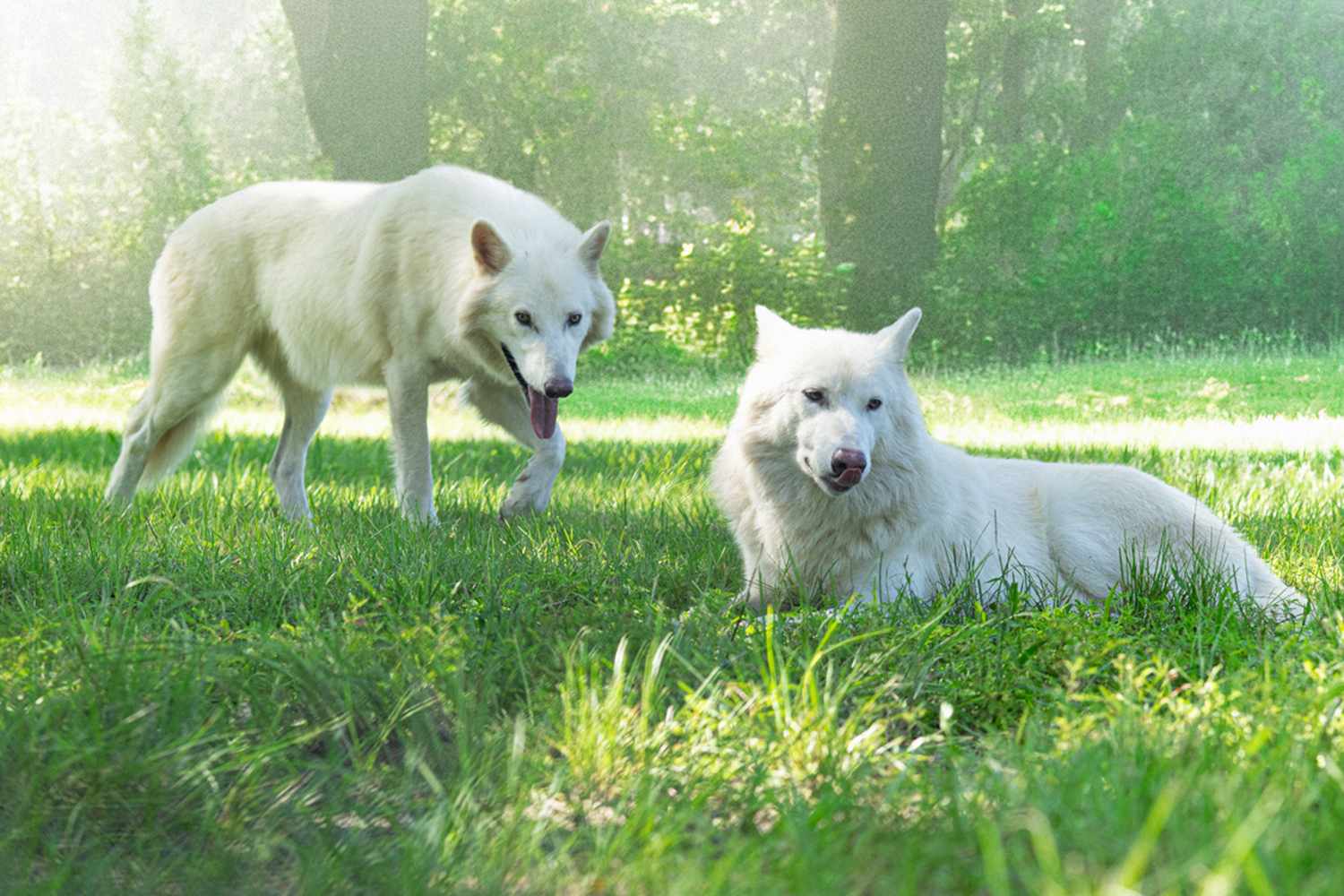
Dire wolves Romulus and Remus standing and sitting in a grassy forest clearing.Credit: Colossal Biosciences
Two years after Romulus and Remus were born, Colossal Biosciences says the dire wolves are healthy and have reached the size predicted by the dire wolf fossil records
A health report obtained by PEOPLE shows normal imaging, bloodwork, hips and teeth across the pack
Khaleesi, cloned from the same male donor as her brothers, is an XY female and was recently spayed. Colossal plans to grow the pack with new, genetically distinct wolves
Colossal Biosciences’ first two dire wolves are celebrating their second birthday, and they’ve grown into their names.
Romulus and Remus, who turned 2 on Oct. 1, and their younger sister, Khaleesi, are healthy and have reached the size scientists predicted from dire wolf fossil records, Colossal’s chief animal officer Matt James and chief science officer Beth Shapiro tell PEOPLE.
“What we’ve found, now, after two years of annual exams, two times we’ve anesthetized all three animals, we’ve done CT imaging and scans, we’ve run every battery of tests you could imagine,” James says, “and what we’re seeing is we got the happiest, healthiest, most excited dire wolves you could have ever hoped for.”
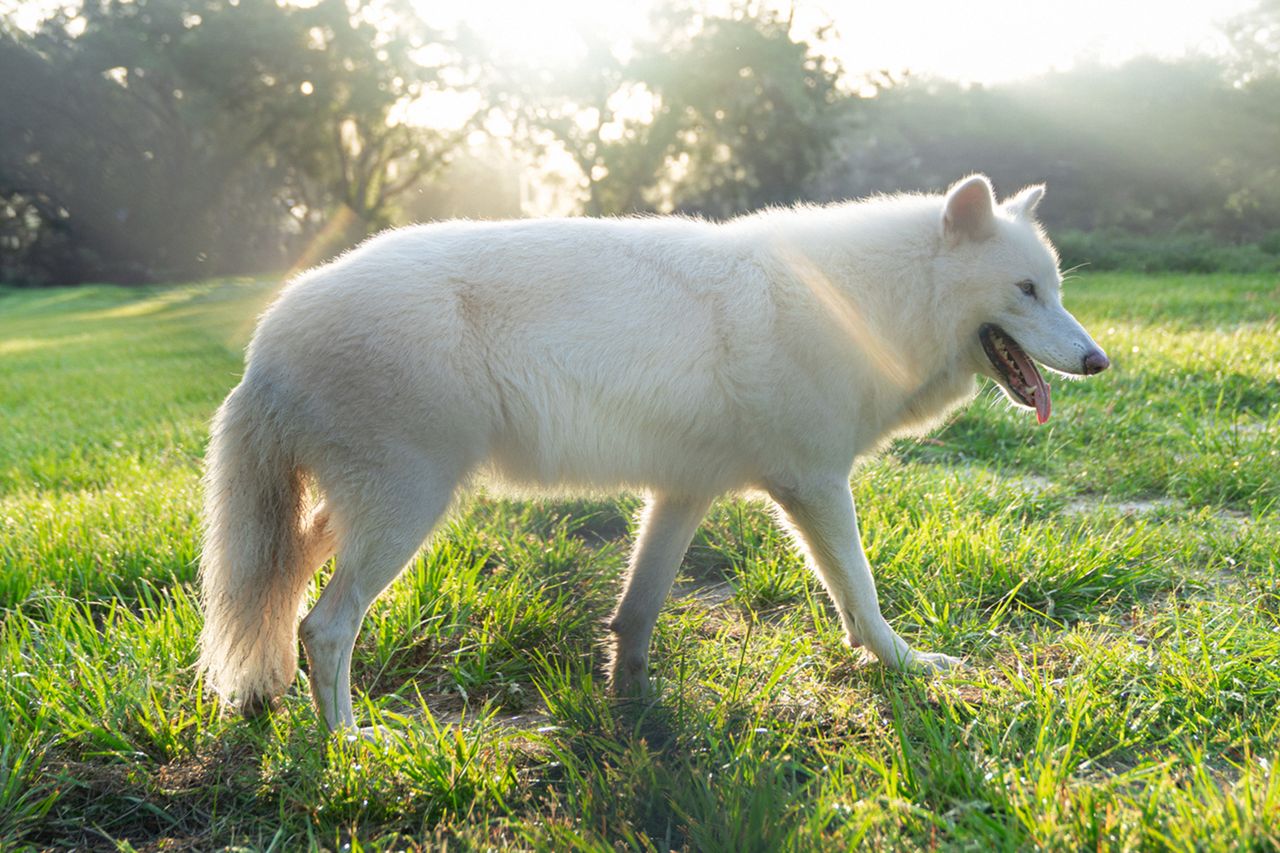
Remus the direwolf walking in a grassy clearing with his tongue hanging out.Credit: Colossal Biosciences
As PEOPLE previously reported, Colossal introduced the trio in April 2025, saying it had edited gray wolf DNA to recreate traits of a species extinct for more than 10,000 years. The brothers celebrated their first birthday last fall.
According to a health report PEOPLE obtained in October 2026, Romulus now weighs 61 kg (134 pounds), and Remus weighs 60.25 kg (about 132 pounds). Both are in ideal body condition, and their growth plates have closed. That puts them in line with estimates from a 2006 study of dire wolves from the Rancho La Brea fossil site in Los Angeles, and makes them roughly a third heavier than an average gray wolf.
“We made these edits to make them larger and more muscular and have this white-colored coat that dire wolves in the past had,” Shapiro says. “And now we can see that they’re full size, that it worked. We were successful.”
For scale, James, who is 6 feet 4 inches tall, says the wolves’ shoulders land just under his hip. Shapiro, who is roughly 5 feet tall, recalls meeting Khaleesi at about 6 months old, when the young wolf “ran up and put her giant paws right on my shoulders.”
Khaleesi, now 20 months old, weighs 46.35 kg (102 pounds), according to the report. She measures 94 centimeters (about 37 inches) at the shoulder and 201 centimeters (about 6 feet 6 inches) from nose to tail. She’s still growing, and James says she’ll likely stay about 20% smaller than her brothers, which is “very normal” for a female.
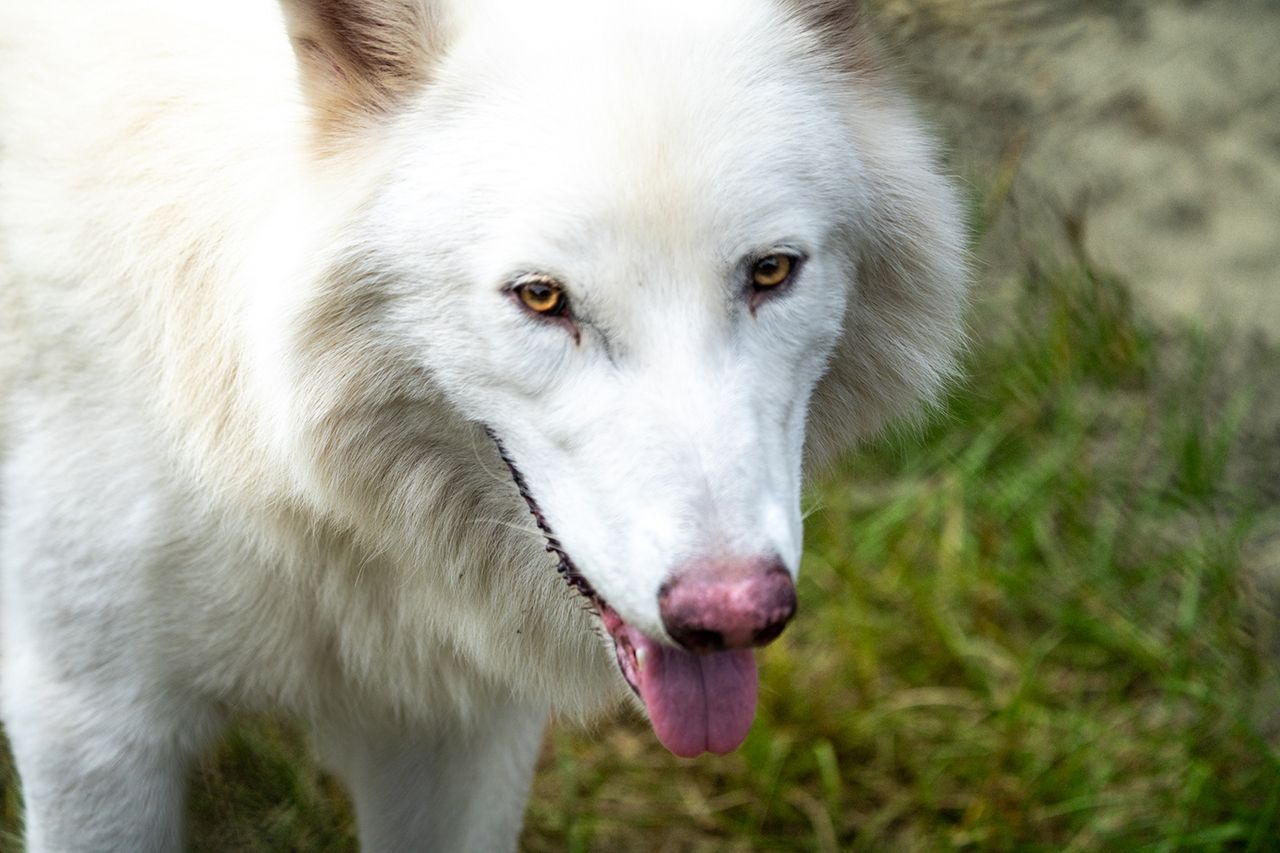
Close-up of Khaleesi the direwolf with her tongue hanging out.Credit: Colossal Biosciences
All three wolves were cloned from the same male gray wolf donor and carry XY chromosomes. In Khaleesi, though, the gene that triggers male development is present but never switched on, the report stated. The same outcome has been documented in cloned and naturally bred dogs and in a wild gray wolf in Alaska. “So, she is perfectly healthy, not unprecedented, and huge,” Shapiro says.
The team recently spayed Khaleesi to examine her reproductive tract. According to the report, she received her anesthetic by hand injection at the enclosure fence while being petted, with no restraint, and was eating within hours of surgery. Since the trio shares one genetic line, they won’t be bred. Instead, James says Colossal will “continue to grow the pack by adding new genetic diversity,” using different wolf lines, “and then natural breeding will take over in future generations.”
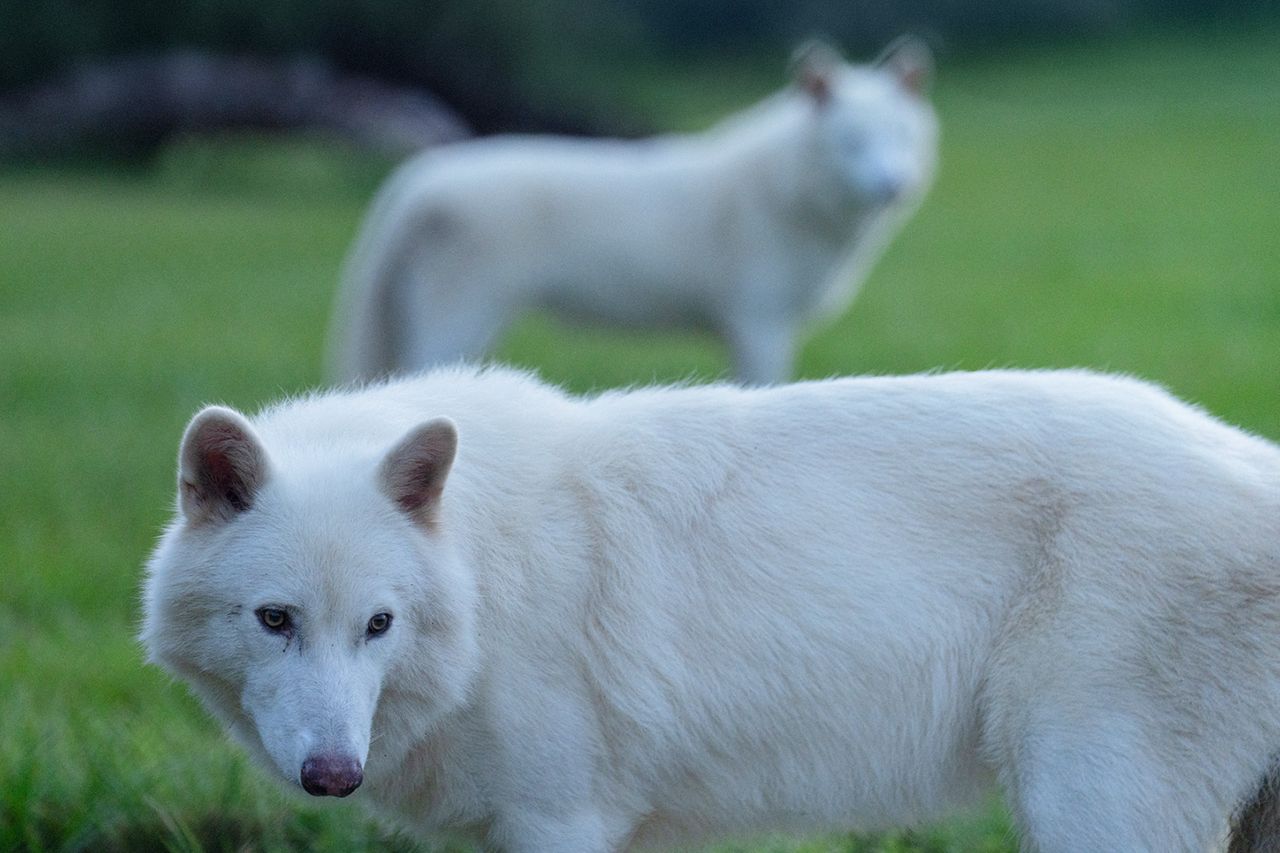
Romulus the direwolf with Remus blurred in the background.Credit: Colossal Biosciences
The rest of the report is similarly a clean bill of health. Imaging found no masses, stones, or structural disease, and all three have normal hips, spines, teeth, and bloodwork. Their only reported illness in the past two years was a case of intestinal coccidiosis as juveniles, which was treated and resolved.
The team will continue monitoring one minor finding: a slightly wider-than-expected collecting space in all three wolves’ kidneys, likely inherited from the donor.
As for personalities, Romulus is slightly bigger, but Remus runs the pack, and Romulus and Khaleesi defer to him for leadership. “He’s got a little Napoleon in him,” James jokes. Khaleesi is most comfortable around people and seeks attention from the keepers, while her brothers keep their distance.
The pack now hunts together on their preserve home, catching rabbits and pursuing deer. The wolves will remain there rather than being released into the wild. Shapiro says the dire wolves are teaching the team how best to care for and monitor gene-edited animals. That knowledge will guide Colossal’s other species, which the company does hope to return to wild habitats eventually.
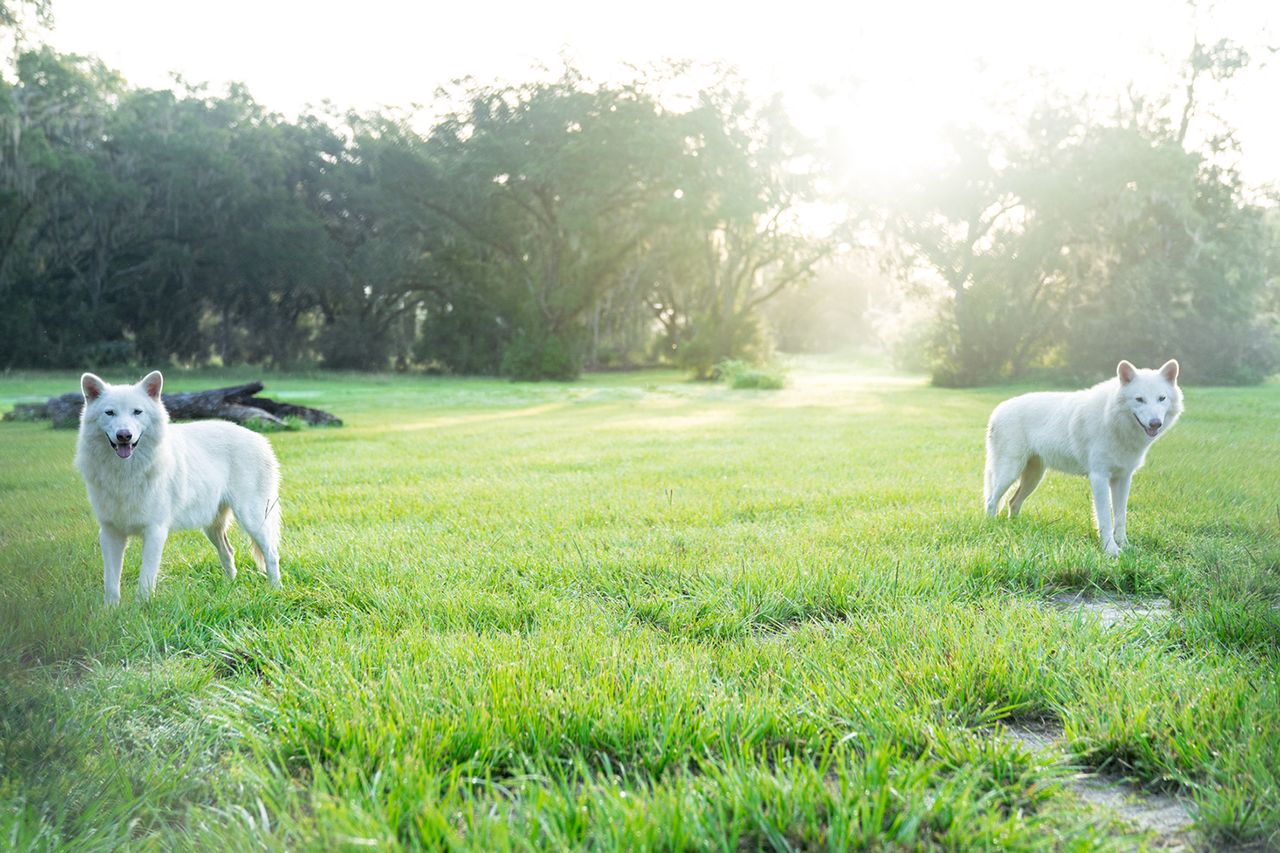
Gene-edited dire wolves Romulus and Remus standing in a grassy field at sunrise surrounded by trees in the background.Credit: Colossal Biosciences
To explain gene editing’s value for conservation, Shapiro points to Colossal Australia’s work with the quoll, a small spotted marsupial that dies after eating invasive, toxic cane toads. The team created a quoll with a single DNA change that makes it resistant to the toad’s toxin.
— sign up for PEOPLE’s free daily newsletter to stay up-to-date on the best of what PEOPLE has to offer, from celebrity news to compelling human interest stories.
“This is a way that gene editing can be used to speed up that evolutionary process,” Shapiro says. “The change to the habitat is faster than natural selection, evolution, can keep up.”
Source: Nature