The 5 Things Your Dog Is Trying to Tell You When They Put a Paw on You

Context and situation matter.
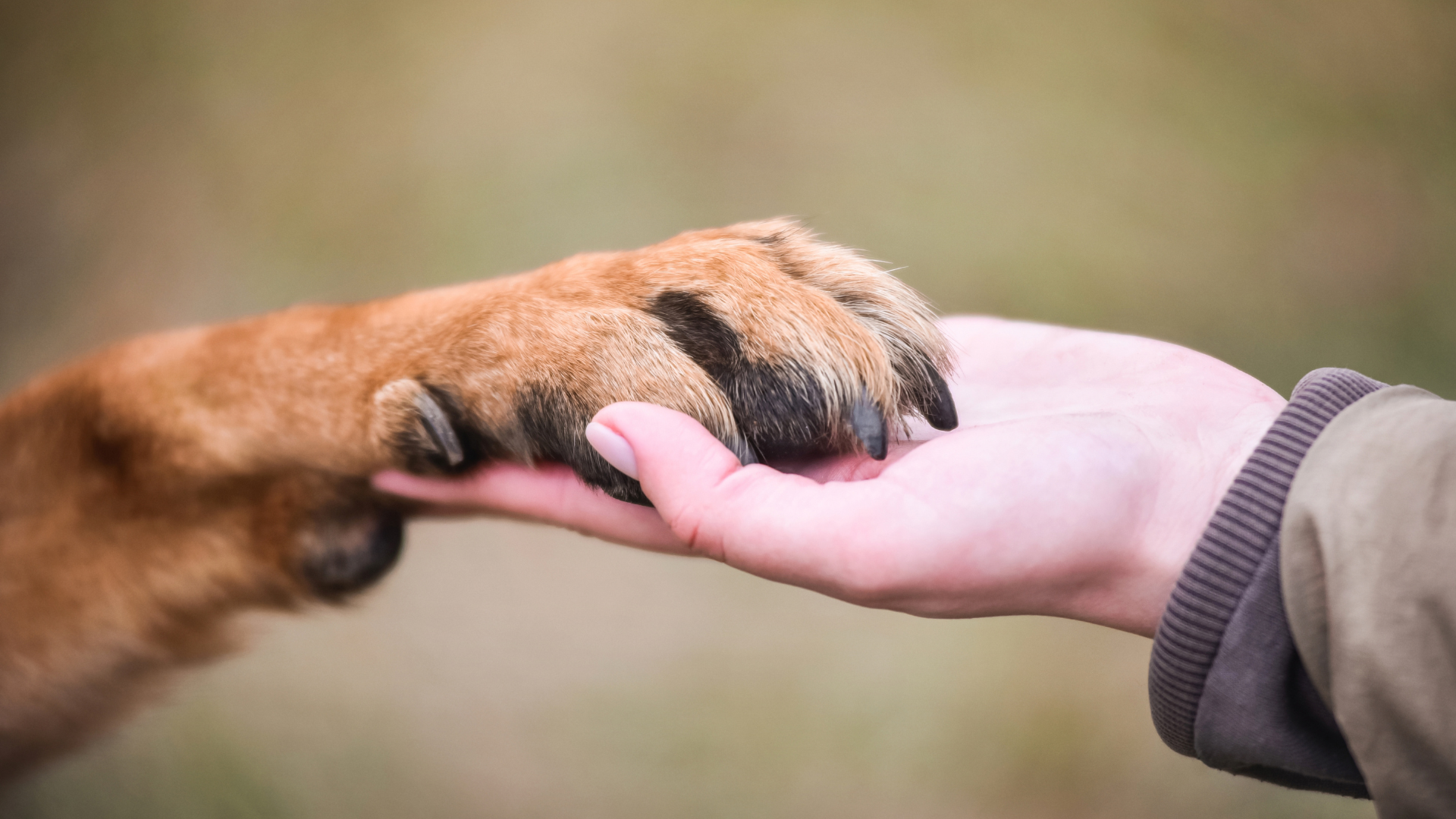
Your dog may place a paw on your knee during dinner. They may nudge your arm on the couch. They may even tap your shoulder from the back seat. With every friendly touch, you may start to wonder what your pup is really trying to say to you. Pawing is one of the most common ways dogs try to communicate with their people, but the message behind it changes depending on context, timing and what your dog has learned works.
Tatiana Yastremski, shelter behavior manager at St. Hubert’s Animal Welfare Center and a certified professional dog trainer and behavior consultant, says, “Placing a paw on a human body part could be an indication that a dog is looking for attention or to indicate a need for a human to act.”
🐶SIGN UP to get “pawsitivity” delivered right to your inbox with inspiring & entertaining stories about our furry & feathered friends🐾🐾
Chris Loverseed, founder of PK9 Gear and head trainer at Positive K9 Training in Melbourne, says the behavior can mean very different things depending on the situation.
We spoke more with Yastremski and Loverseed to help us decode this dog behavior and why a dog may put a paw on you. Here are five of the most common things your dog may be trying to tell you, according to these two experts.
5 Things a Dog Is Trying to Tell You When They Put a Paw on You, According to Experts
Here’s what your dog is really trying to communicate to you.
1. They want your attention or need you to do something.
Images via Shutterstock/Svechkova Olena
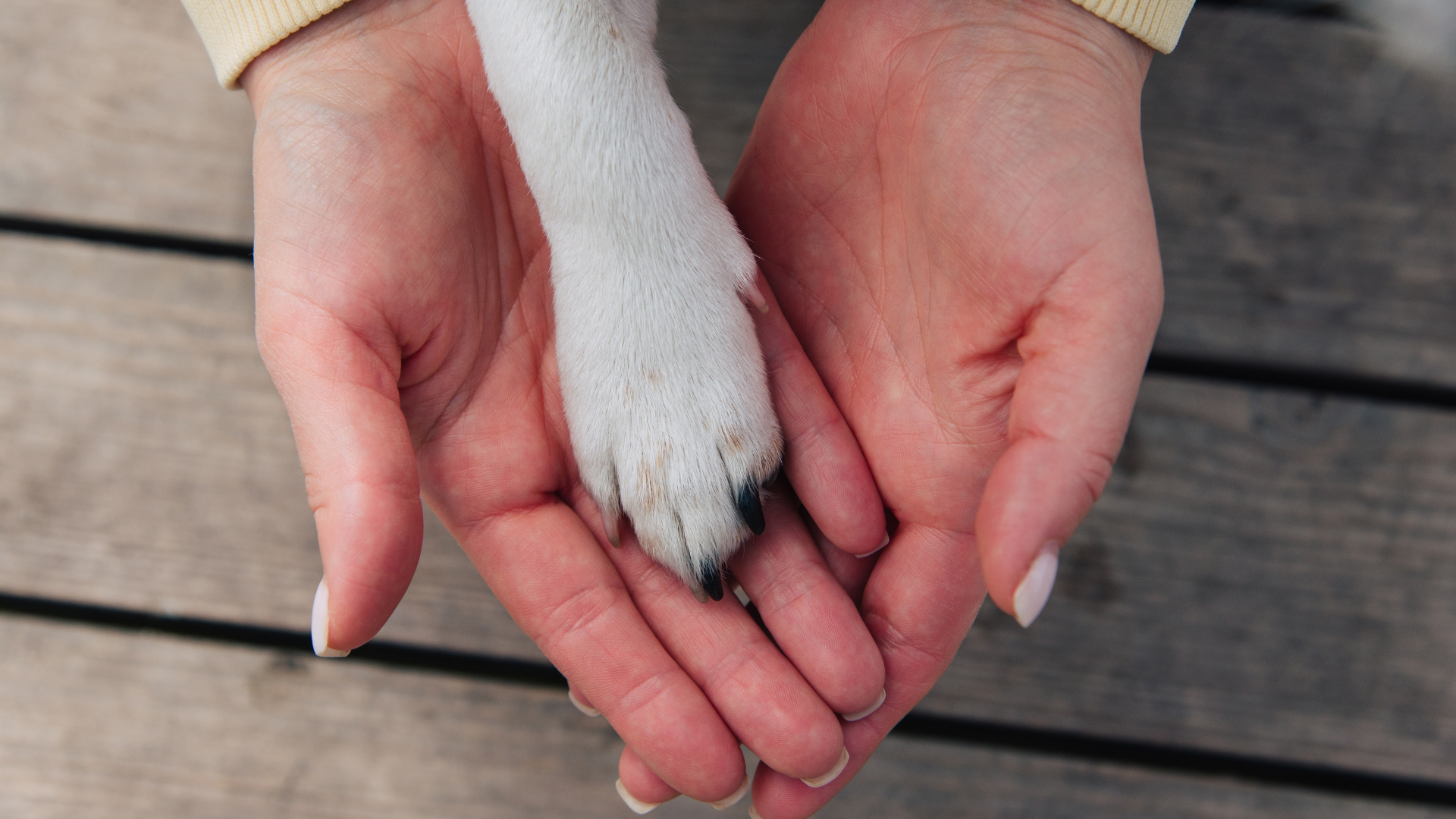
Both experts say that attention is one of the most common reason dogs paw at their owners.
Yastremski says her own dog will paw at her when she wants “dessert” after dinner, needs a bathroom break or wants help retrieving a ball stuck under a piece of furniture. The paw, in these cases, is like a direct request: “I need you to do something for me.”
Loverseed says the behavior often starts earlier than you may realize because for so many people, one of the first things they teach their dogs is to shake paws because it’s cute.
Related: 7 Sweet Bedtime Behaviors That Mean Your Dog Trusts You Completely
That trained trick can quietly evolve into a general attention-getting tool. “The more time you spend rewarding it, the more likely they are to try it again,” Loverseed says. “You might only want a paw when you ask for one, but that isn’t necessarily what you’ve taught the dog.”
Even without formal “shake” training, dogs can learn on their own that a paw gets results. “Some dogs have learnt inadvertently that pawing at you gets your attention,” Loverseed says. “You stop what you’re doing, look at them, talk to them. That can be enough.”
2. They want you to keep petting them.
Bianca Grueneberg/Shutterstock
You’re scratching behind your dog’s ears. For a moment, you stop to check your phone or look up something. Then a paw lands on your arm.
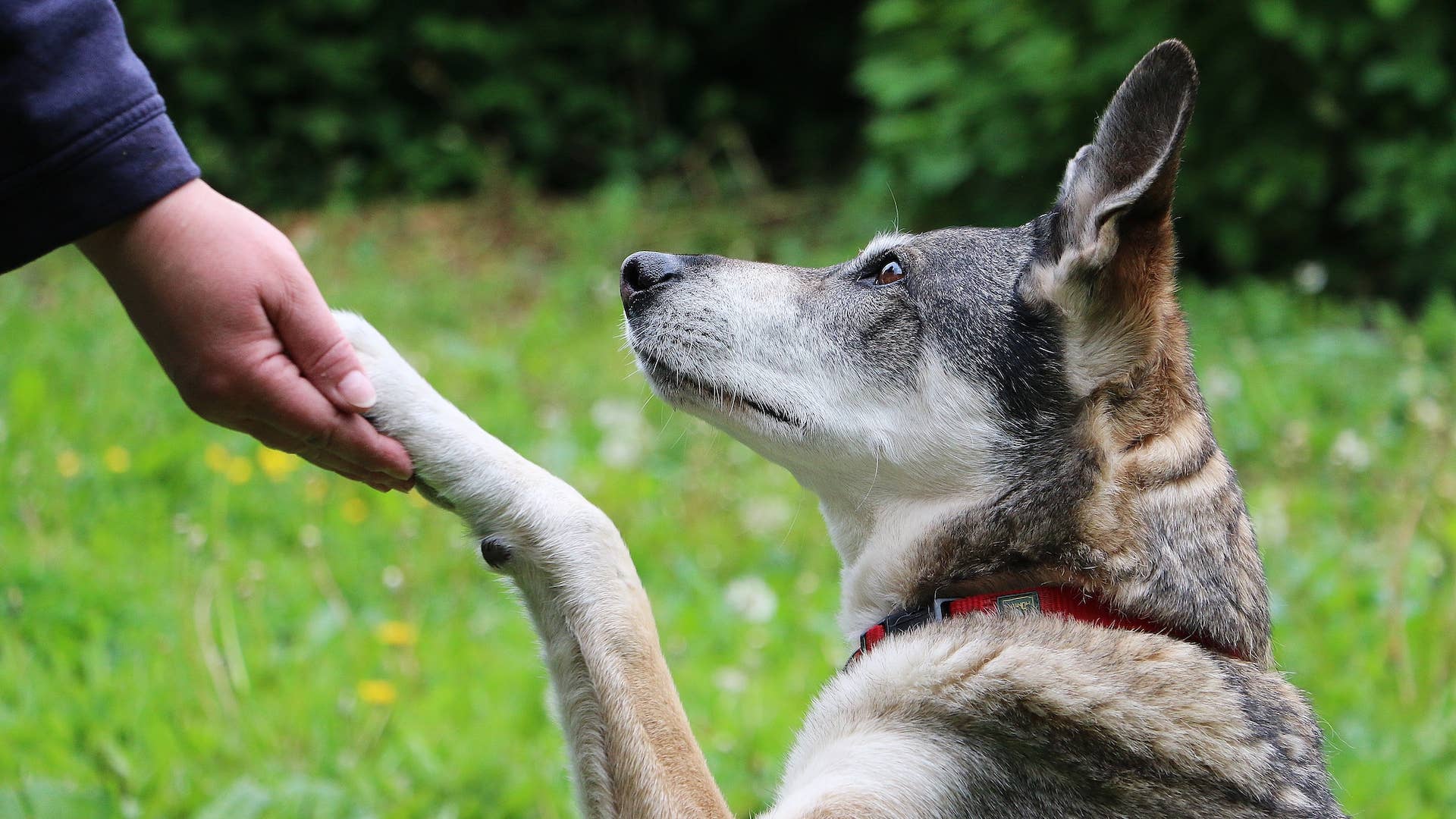
Yastremski calls this “soliciting affection.” Dogs use their paws to tell humans that whatever was happening before felt good, and they would like it to continue. That includes petting, massage or scratches in specific spots the dog particularly enjoys.
How do you know if your dog wants more? Pause and see if they move away. If they’ve had enough, they will move. If they want more, they’re likely to be relaxed and leaning into you, and their paw may arrive the moment your hand stops moving to tell you to continue.
3. They’re trying to comfort you.
Shutterstock/MVolodymyr
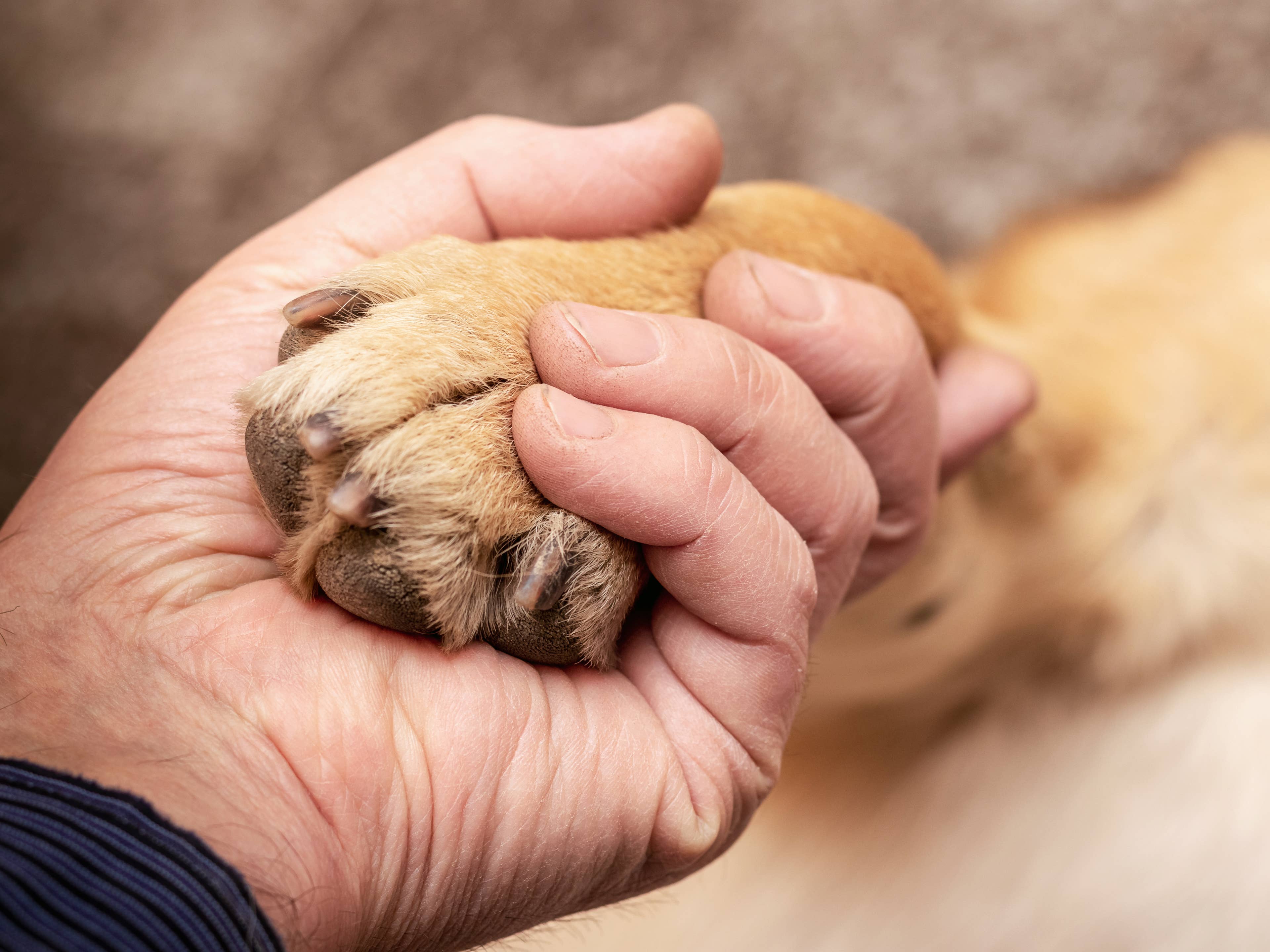
Dogs pay close attention to the people they live with. They notice changes in posture, breathing, tone of voice and routine. When something seems off, some dogs respond by placing a paw on their person.
Yastremski says this behavior reflects a kind of empathy. “Our dogs can sense when their humans are sad or stressed because they observe our behaviors so intently,” she says. “A paw placement could be a gesture of comfort or empathy dogs offer to humans.”
This kind of behavior may happen during quieter moments. You’re sitting on the couch after a hard day, or you’re visibly upset about something, and your dog walks over, sits beside you and places a paw on your leg. They don’t want food or play. They are simply showing up for you, like a best friend would do.
4. They need reassurance.
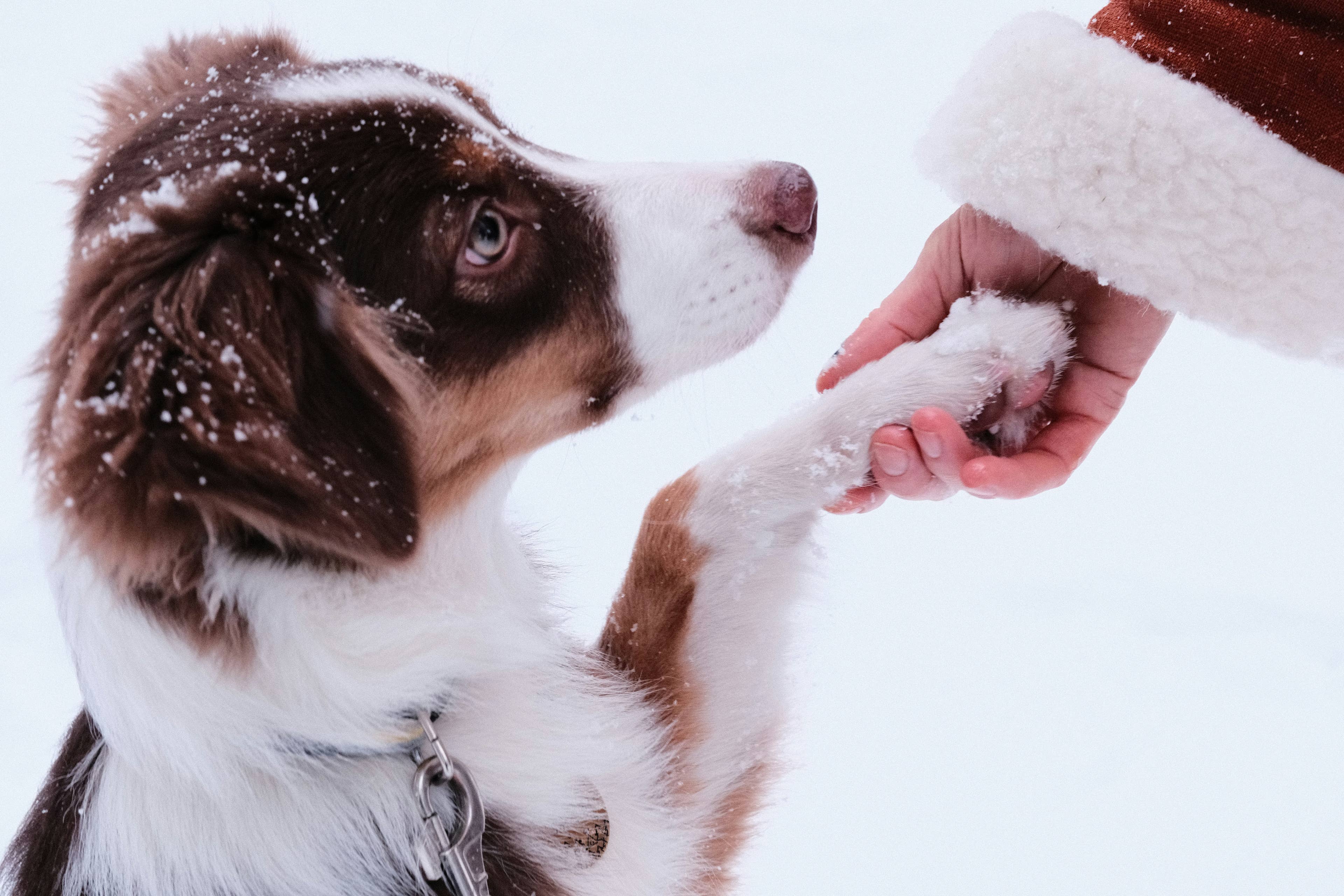
Photo by Tanya Nikan on Unsplash
The flip side of comforting you is that some dogs paw at their owners because they need comfort themselves.
Yastremski says a paw placed during a stressful situation can be a dog’s way of asking for reassurance and safety.
This kind of pawing often shows up during thunderstorms, fireworks, vet visits, car rides or any situation where a dog feels anxious. You will notice a different body language compared to a playful or attention-seeking paw. A stressed dog may also be panting, trembling, yawning or holding their ears back.
5. They’re trying to tell you something might be physically wrong.
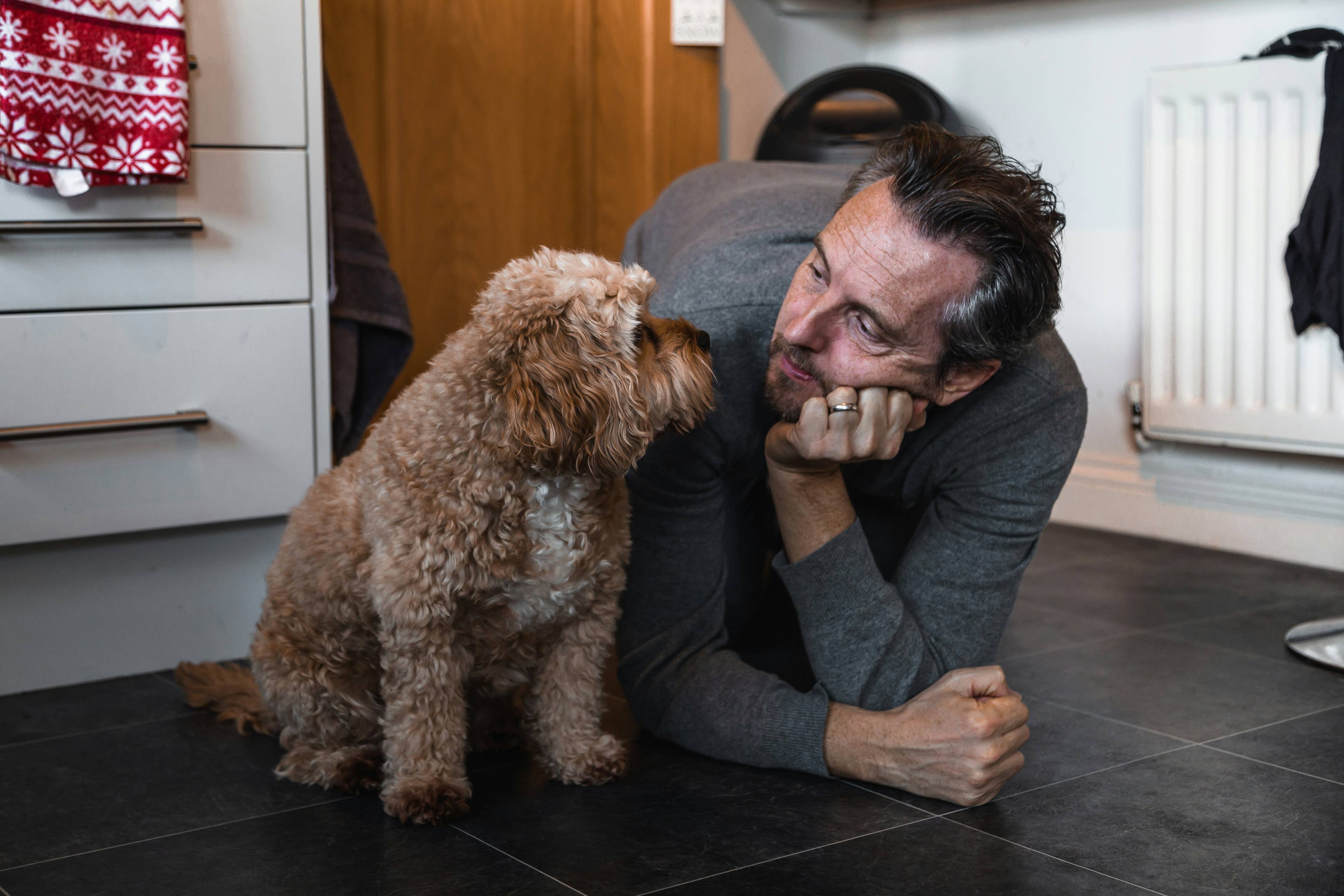
Photo by Charlie Green on Unsplash
In some cases, you need to take pawing more seriously.
Yastremski says a sudden increase in pawing, particularly in dogs that don’t normally do it, could signal physical pain.
“Owners whose dogs rarely pawed and are pawing more frequently or incessantly should check with their veterinarian to rule out a health issue,” she says.
Loverseed raises a related scenario that is easy to miss. If a dog places a paw on you while you’re handling them and is also pulling away, turning their head or tensing up, the dog may be uncomfortable with what you’re doing.
“That’s quite different from a relaxed dog asking for another pat, even though you’re getting a paw in both situations,” Loverseed says. If this happens, stop what you’re doing and give the dog a break.
Context and change are important. A dog who has always been a paw-placer is probably just communicating in the way they’ve always communicated. A dog who suddenly starts pawing more than usual, or who pairs it with signs of tension, may be trying to tell you something new.
Some Dogs Are More Likely to Paw Than Others
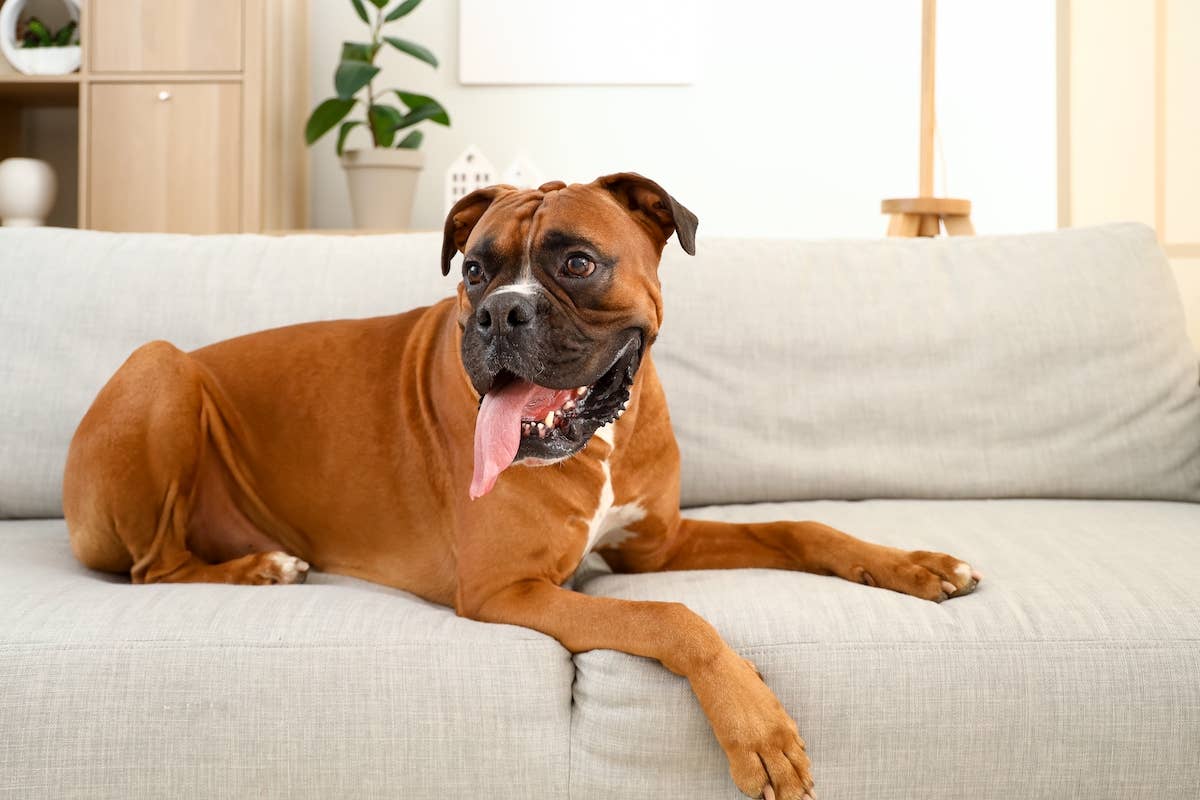
Image via Shutterstock/Pixel-Shot
Both experts say that some breeds are simply more inclined to use their feet.
Yastremski notes that boxers and Rottweilers tend to use their paws more frequently than other breeds.
Loverseed adds, “In play, they can be quite physical with their feet. I’d be looking at those things, not just what breed it is.”
If a boxer is pawing at you, it still matters whether there’s a toy nearby, whether the dog’s body is loose and playful, or whether something else is going on.
What Should You Do When Your Dog Puts a Paw on You?
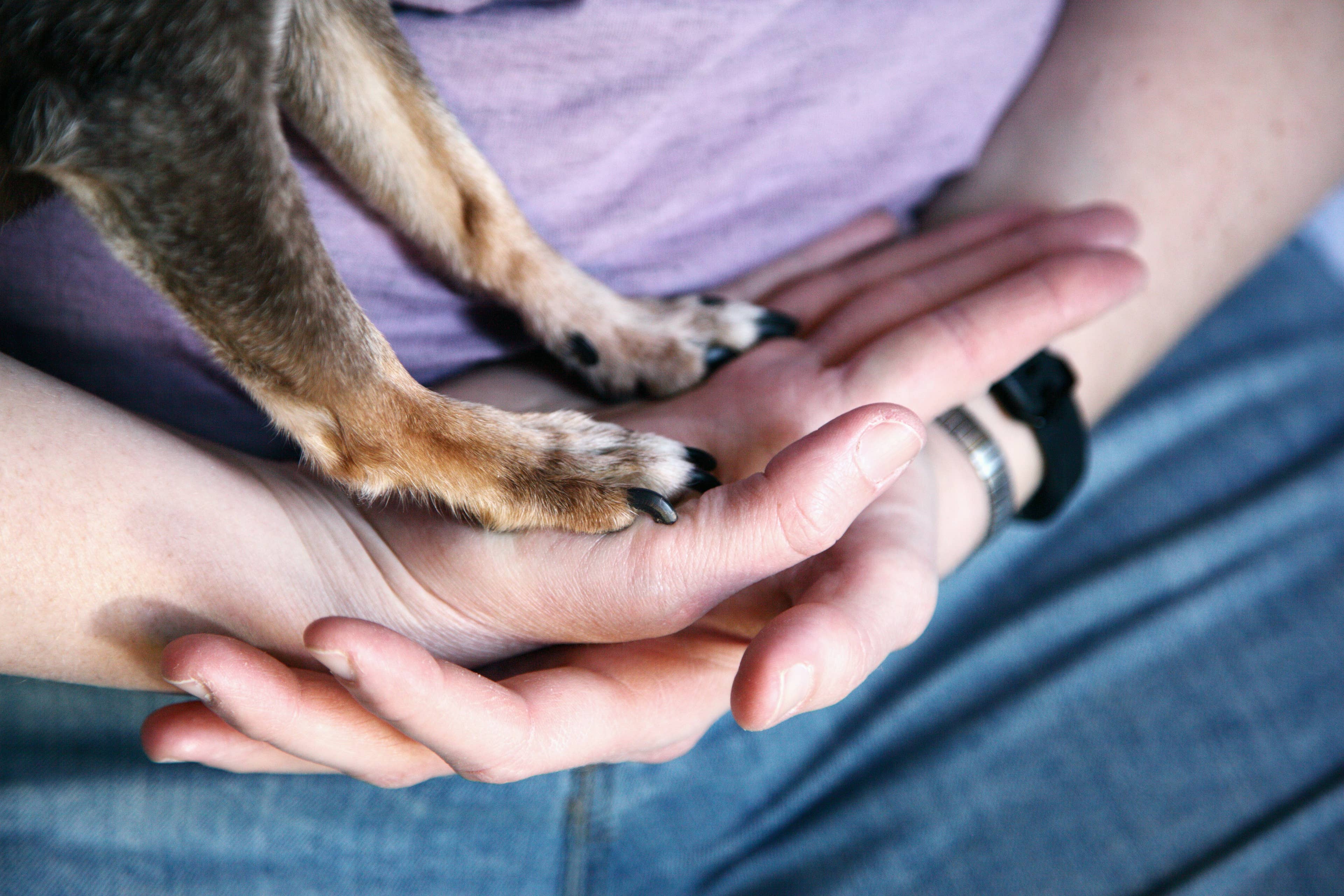
Photo by Shane on Unsplash
Loverseed says the right response depends entirely on the reason behind the behavior.
If the dog needs to go outside, let them out. If they’re uncomfortable with something you’re doing, stop and give them space. Do not ignore these moments to make a training point.
However, if the pawing has become a nuisance or a demand, Loverseed recommends a two-step approach. First, stop rewarding the behavior. Then ask the dog to perform an incompatible behavior and reward that instead.
For example, keep them with all four feet on the floor, or send them to a mat and settle there. Do not use “sit” as an alternative because dogs can still paw at you while sitting.
His final suggestion: teach the replacement behavior on its own during calm moments, rather than waiting until the dog has already started pawing.
And if you’re happy with a gentle paw now and then? Then there’s no need to turn that into an issue either.
Sources:
Tatiana Yastremski is the shelter behavior manager at St. Hubert’s Animal Welfare Center and a certified professional dog trainer and behavior consultant.
Chris Loverseed is the founder and head trainer at PK9 Gear.
Related: Why Saying “I Love You” to Your Dog or Cat Doesn’t Work (and What to Do Instead)
This story was originally published by PetHelpful on Oct 15, 2026, where it first appeared in the Dogs section. Add PetHelpful as a Preferred Source by clicking here.
Source: Nature