What Happens When Your New Cat Species Goes Mega-Viral?

What Happens When Your New Cat Species Goes Mega-Viral?Text by Jason Bittel; photographs and video by

![](https://hermes.media.static.aol.com/media/2026/10/14/a456b251-b8f6-3f03-94c4-50140c65f04d/88dea3d9-e27f-4f6a-bbc6-379c9d5eb8d6.jpg)

The discovery of the first new cat species in 100 years generated an immense amount of global attention. Scientists and its caretakers are now hopeful the interest will turn into progress for protecting its environment.

For seven weeks this past summer,Vicky Ossiodidn’t know if any of the 1,200 rescued animals in her care would survive.

Ossio is the co-founder of Senda Verde, a Bolivian wildlife sanctuary two-and-a-half hours from the capital city of La Paz. Senda Verde lies in one of the areas that was severely affected by anti-government road blockades, which cut off the flow of fuel and food in the country this summer. Each week, she needs to source nearly 500 pounds of meat to feed all the Andean bears, jaguars, and many wild cats in her care. “I would wake up and the only thing I did during the whole day is try to find food,” says Ossio.

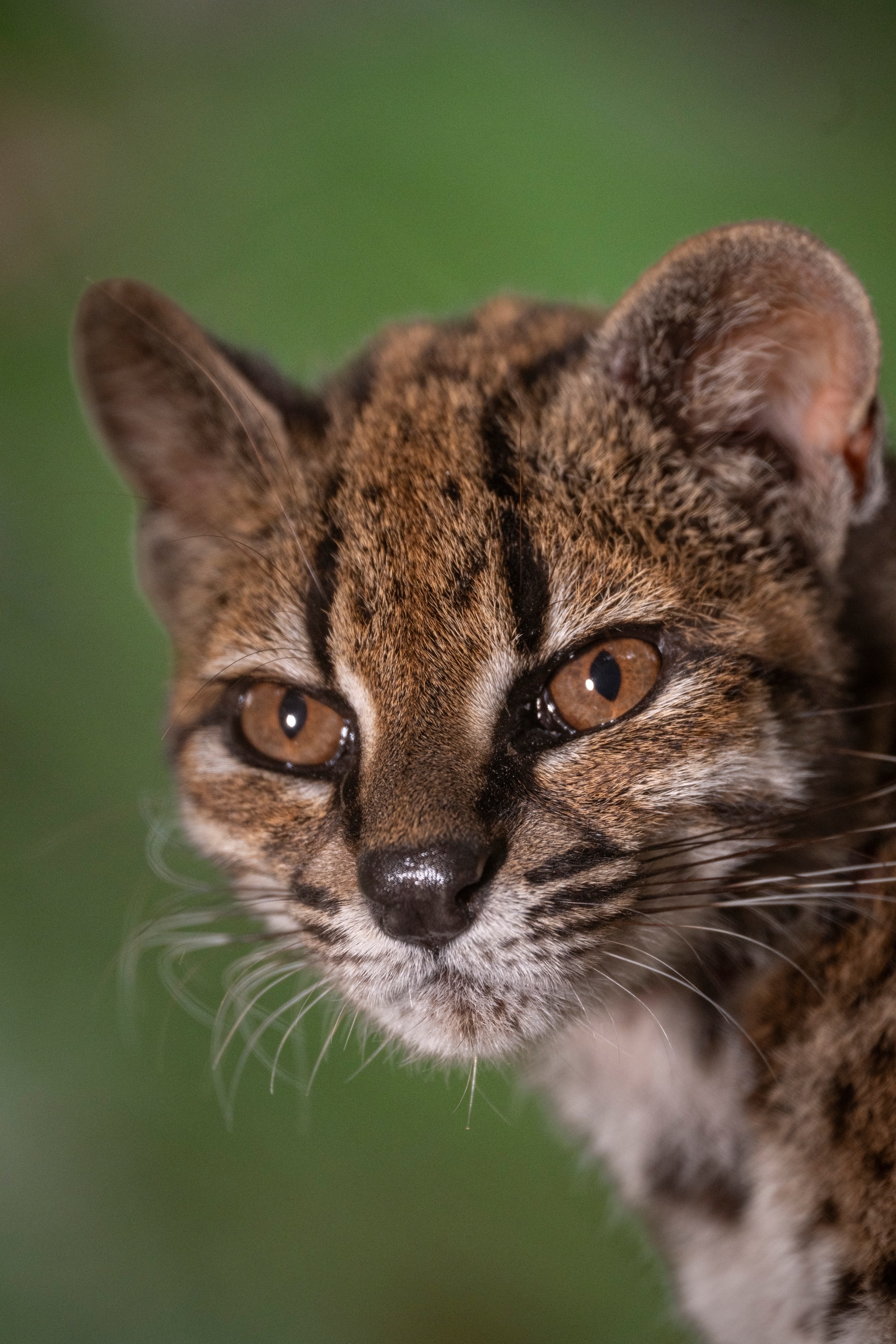
Miraculously, Senda Verde survived the blockades by buying in-season fruit from their neighbors and relying on a flock of 60 egg-laying chickens. But the experience was still fresh in Ossio’s mind when the news broke last month: Scientists had confirmed that one of the wild cats in the sanctuary was, in fact, a newly discovered species, now known as the tilcayo. Native to Bolivia, genetics revealed that the small, spotted feline had diverged from other members of the tiger cat species complex around 1.4 million years ago.

To say Ossio was unprepared for the tidal wave of media coverage the discovery would generate would be an understatement. Reporters from around the world had her phone ringing every ten minutes, even while she was traveling through remote parts of the country. Soon after, Ossio was informed that more than $150,000 had been donated to the sanctuary through a crypto campaign. “You have no idea the peace of mind that granted us,” Ossio says. The money should ensure the sanctuary can afford food for its inhabitants no matter what other unforeseen events lie down the road.

“Getting funding for small cats is so hard,” says  Paola Nogales-Ascarrunz, a Bolivian biologist and co-lead author of the study that described the tilcayo. “But now, somehow, we broke the internet with a small cat.” About a month since the discovery was announced, the extreme attention has led to an optimistic outlook for studying and protecting the new cat species—and a few weird consequences of sudden viral fame.

After the news broke, Nogales-Ascarrunz, who is also a National Geographic Explorer, conducted hours and hours of interviews, then watched in awe as tilcayo stories took over her Facebook, Instagram, TikTok, and even LinkedIn feeds. Friends in Germany, Poland, and India all reached out to congratulate her.  “I’m so tired of seeing my face,” she laughs.

Except, it wasn’t always Nogales-Ascarrunz’s face. In numerous AI-generated stories about the tilcayo, the Bolivian researcher says her images were rendered with more Caucasian features. “They made me white with blonde hair,” she says. In other AI-generated posts, the only scientists shown were fictional men.

At one point during the media frenzy, Ossio says their website was receiving 137 hacking attempts every ten minutes. There have also been some worrying phone calls. Someone in Seattle offered to buy the tilcayo, she says. Another call, this one from a region in Bolivia well-known for its ties to drug producers, wanted Ossio’s help determining if a similar-looking cat they had in their possession was also a tilcayo. In Ossio’s eyes, both instances raise the issue of mascotism—or when wild animals become so popular, it creates an uptick in people trying to find them in the wild and then keep them or sell them as pets. “Of course, we don’t want to put the tilcayos at risk,” says Ossio.

Fortunately, most developmentsto emerge out of the tilcayo media bonanza have been positive. In the weeks since the tilcayo went viral, Nogales-Ascarrunz has enjoyed seeing fan art of the cat from around the world. She and her study coauthor, Eduardo Eizirik, were also given an award by the governor of La Paz. But one of the more curious developments to emerge from the attention is related to the tilcayo’s name.

In their study, the scientists gave the cat the name “tilcayo,” because that is how some locals in the region referred to it back when it was thought to be a different species. However, when Nogales-Ascarrunz investigated whether the word had any meaning, she came up empty in both Spanish and Quechua, a locally spoken indigenous language.

However, she’s now been contacted by a linguist who believes the word might come from another indigenous South American language known as Aymara. The translation? Til comes from a word that means “small” and cayo from another that means “paw” or “foot."

All of which would make sense, she says, since the tilcayo has a smaller footprint than both ocelots and margays.

Similarly, more than a few citizen scientists have begun to send photos of small, spotted cat specimens to the researchers, wondering if they, too, had captured evidence of a tilcayo. So far, most appear to be margays, says Nogales-Ascarrunz. Even still, the interest is inspiring, she says.

At the same time, awareness of the tilcayo may also create the political pressure needed to protect local people and animals from illegal gold-mining activities that threaten much of Bolivia. These operations draw sediment up from rivers and then use mercury like a magnet to extract tiny flakes of gold that are otherwise missed by panning. Some of that mercury washes into waterways, eventually finding its way into fish and other animals. Local people rely on these animals for food, which in turn puts them at risk for heavy metal poisoning.

According to Ossio, illegal gold mining often occurs in the region, impacting the water near the sanctuary.

“The water looked like chocolate milk, and that was from the mining,” says Joel Sartore, a National Geographic Explorer and photographer who traveled to Senda Verde to film the tilcayo. “Three days later, after the police had come and made them stop, the water was a lot clearer. Not gin-clear, but you could clearly see the difference just by looking at it.”

Illegal mining has traditionally been difficult to root out. But now, with local, regional, and national politicians all eager to protect the tilcayo, the tide may be beginning to turn.

“We are using the tilcayo as a flagship to hopefully get Coroico [the nearby community] free of mining,” says Ossio.

For her part, Nogales-Ascarrunz hopes the cat’s international profile will also make it easier to find funding for the next step—more science to learn more about the tilcayo and how to protect it.

Bolivia isn’t known for its World Cup team, and it’s never won one of the Big Four international beauty pageants, she jokes. “But right now, with science and biodiversity, the whole world is talking about Bolivia,” says Nogales-Ascarrunz.

Jason Bittel is a National Geographic Explorer and author of Grizzled: Love Letters to 50 of North America’s Least Understood Animals.Fernando Faciole is an award-winning National Geographic Explorer, conservation photographer, and biologist from São Paulo, Brazil.

The nonprofit National Geographic Society, committed to illuminating and protecting the wonder of our world, funded Explorer Paola Nogales-Ascarrunz’s work.


Source: Nature

What Happens When Your New Cat Species Goes Mega-Viral?

What Happens When Your New Cat Species Goes Mega-Viral?Text by Jason Bittel; photographs and video by ![](https://hermes.media.static.aol....

Meet Katie Zacharia's family. She and husband Tyler have 4 kids

Meet Katie Zacharia's family. She and husband Tyler have 4 kids

![](https://hermes.media.static.aol.com/logos/light/aol_usatoday_us_articles_590.png)

Melina Khan, USA TODAYWed, October 14, 2026 at 4:23 PM UTC

![](https://hermes.media.static.aol.com/media/2026/10/14/f1a0be7b-c065-3952-ae2c-5f14710c05cb/8e84616e-decb-44f5-a861-4a305275bf06.jpg)

Katie Zacharia's family of six is balancing bicoastal living – at least for now – while she finds her footing as White House press secretary.

Zacharia, who held her first press briefing on Oct. 13, and her husband Tyler Zacharia have four young kids together. Before she was tapped by President Donald Trump, Zacharia and her family lived in California.

The family plans on moving to Washington, D.C., Zacharia said from the briefing room lectern.

This week, her husband traveled to the nation's capital with their kids so the family could celebrate two birthdays together, a tradition they are "very protective" of, she said.

"I intend to, to the extent possible, include my family, include my kids in my work. Though my work will be demanding, they will always be a priority," Zacharia said.

Public interest in Zacharia's personal life has grown after she succeeded Karoline Leavitt, the fourth White House press secretary in seven years to say they were resigning from the role to focus on their family. An August USA TODAY analysis found mothers who served as White House press secretaries stayed about a year less than everyone else.

Here's what to know about Zacharia's family.

More news: Katie Zacharia takes the podium for first White House briefing

Katie Zacharia's husband Tyler Zacharia is a film producer and executive

Katie Zacharia's husband Tyler Zacharia is a former investment banker turned film producer and executive.

He received a bachelor's degree in international politics and military security from Georgetown University. After graduating, he moved to Beijing, China, and worked for a private equity firm for six years before pivoting to the film industry, according to a 2016 Pepperdine University profile and his LinkedIn.

Tyler Zacharia, who also has a master of business administration degree from Pepperdine, is the chief operations officer for production company 2521 Entertainment. He also heads business operations for the entertainment companies CenterStage Technologies and Boies Schiller Entertainment, per his LinkedIn.

According to his bio from 2521 Entertainment, Tyler Zacharia has produced films including Martin Scorsese's "Silence" and "The Irishman."

Katie Zacharia said a July podcast episode for LA Mom Magazine that she has tried to remain separate from her husband's career.

"His job is very Hollywood-based and not political. My job is highly political," she said. "He's often gotten a little bit of negative feedback about his wife's job and who she supports in the news."

Katie Zacharia's four kids are between ages six and 12

Katie Zacharia said at the briefing that she has three sons and one daughter, ages 12, 10, eight and six.

She said she was a stay-at-home-mom from 2014 to 2020 before her foray into political commentating for networks including Newsmax and Fox News.

"The sacrifice of staying home for me, for the young years, I knew I needed to be home with them when they were babies. And I completely poured into those years," she said in a July podcast episode for LA Mom Magazine.

After returning to the workforce, Zacharia said in the episode that she has balanced her career and family life by integrating both together. Her kids have often gone to television sets or on work trips with her, she said.

"What I perceived was a career break was actually such a gift and motivated me even more, and no years were lost," she said.

Melina Khan is a national trending reporter for USA TODAY. Keep up with her on X @melinakh and Instagram @bymelinakhan.

This article originally appeared on USA TODAY: Meet Katie Zacharia's family. She and husband Tyler have 4 kids


Source: Entertainment

Meet Katie Zacharia's family. She and husband Tyler have 4 kids

Meet Katie Zacharia's family. She and husband Tyler have 4 kids ![](https://hermes.media.static.aol.com/logos/light/aol_usatoday_us_ar...

Friends Travel to ‘Depths of the Ocean’ to Share Adventures with 16-Foot Tiger Sharks and Venomous Snakes (Exclusive)

Friends Travel to ‘Depths of the Ocean’ to Share Adventures with 16-Foot Tiger Sharks and Venomous Snakes (Exclusive)

![](https://hermes.media.static.aol.com/media/2026/10/14/deae27e6-e4df-32a3-b4b2-5373d12811c0/5bf98bd6-735e-48c8-a6c3-efe86e5017fb.jpg)

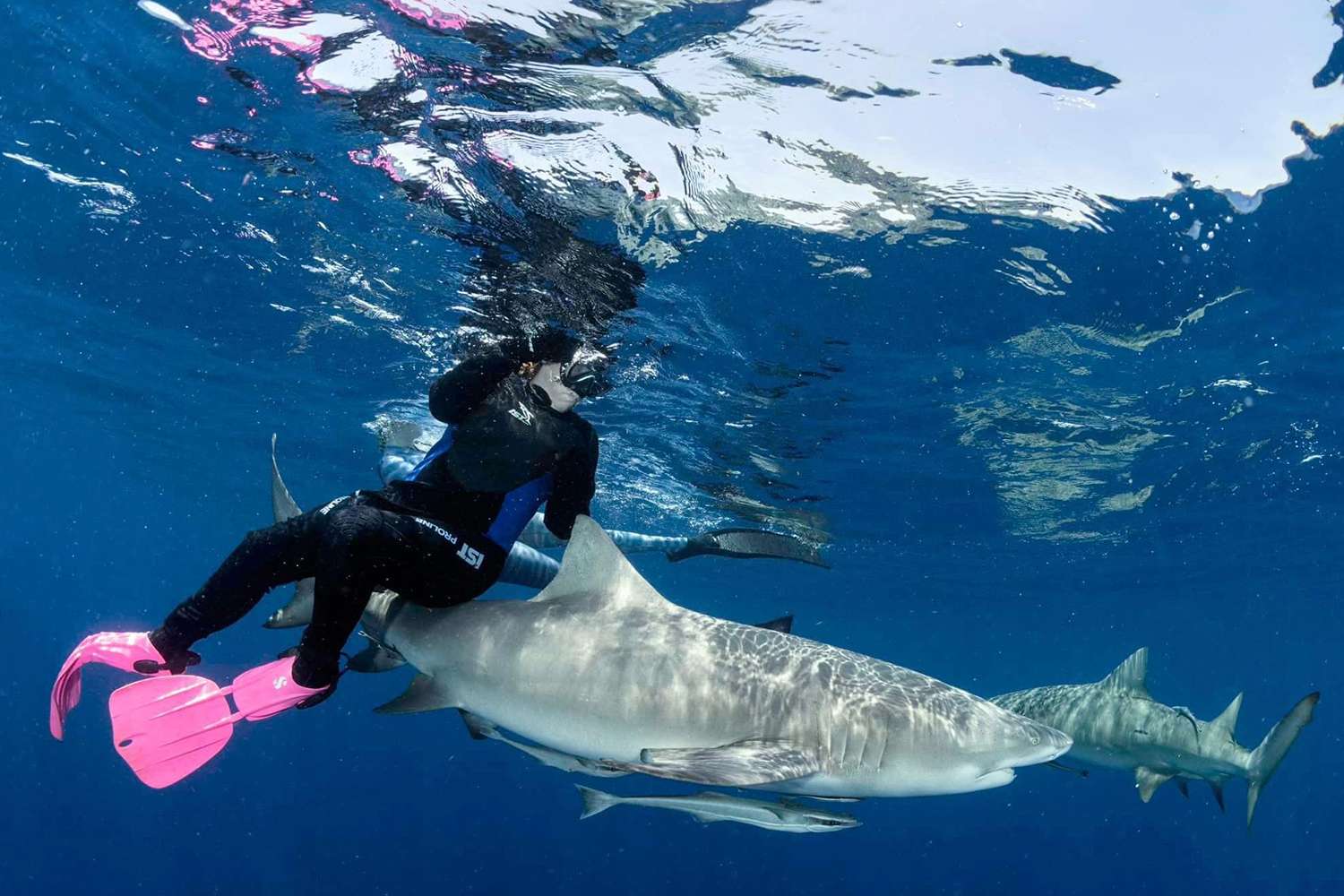
Brittany Badahss swimming with a shark.Credit: WanderPix Japan

Brittany Badahss and Bettina Kelley run the social media account DiveDiveLIVE, where they livestream their deep-sea dives

Their goal is to help younger viewers overcome fears and connect with marine life

Recently, the friends gave up most possessions to travel internationally with roughly 100 pounds of diving and camera equipment each

Brittany Badahss and her friend Bettina Kelley take viewers to places most people will never see firsthand.

Through their social media account, DiveDiveLIVE, the friends travel the world to livestream their underwater adventures, from swimming alongside a pregnant 16-foot tiger shark to witnessing an eel battle a much larger fish. But their goal extends beyond capturing extraordinary encounters.

“A big target audience of ours right now is younger people and trying to get younger people more invested in the ocean,” Badahss, 36, tells PEOPLE exclusively over Zoom.

For Badahss, that mission is personal. Although she grew up surrounded by the ocean in Hawaii, she says she was once afraid of sharks and deep water. Around age 29, after quitting drinking, she began kayaking. During one outing, whales breached near her kayak, sparking an interest in the ocean.

![](https://hermes.media.static.aol.com/media/2026/10/14/deae27e6-e4df-32a3-b4b2-5373d12811c0/733b4720-dc68-4552-9035-9a4ae45dedfd.jpg)

Brittany Badahss during a deep sea dive.Credit: WanderPix Japan

Eventually, she returned to school to study marine biology. Though she didn’t finish her degree, she got scuba certified. Kelley, 43, had her own path to the water. She had lived in Maui for 15 years before getting scuba certified alongside Badahss.

As the two women spent more time diving together, they began thinking about how to share their underwater experiences with people who couldn’t join them in person. Turning that idea into a livestreaming project; however, required more than simply bringing a camera underwater.

The friends had to research equipment, work through technical challenges and figure out how to broadcast from beneath the surface.

“I thought we were doing this like... It is so innovative and it’s so cool,” Badahss says of the early days. “And we’ve spent so long trying to like figure this out and bring the ocean to people.”

![](https://hermes.media.static.aol.com/media/2026/10/14/deae27e6-e4df-32a3-b4b2-5373d12811c0/7ab928b3-6bed-4998-b0ec-ed49d7ea08c9.jpg)

Their first underwater livestream attracted only about 30 viewers. But the friends kept going, eventually logging roughly 100 livestreams before a night dive off Maui gave them a moment they wouldn’t soon forget.

Around midnight, they spotted an eel attacking an enormous fish, which Badahss identified in the interview as an Achilles tang. The encounter lasted four or five minutes as the eel appeared to take on a fish too large to fit in its mouth.

Badahss was audibly freaking out as the scene unfolded. Meanwhile, their audience surged from roughly 30 or 40 viewers to 7,000 or 8,000 in about a minute, she says.

“It was the craziest thing,” she recalls.

The encounter helped bring new viewers to DiveDiveLIVE, many of whom returned for future broadcasts. As the audience grew, so did the opportunities for viewers to participate, asking questions, identifying sea creatures and sharing in the friends’ discoveries in real time.

The women have since built an international audience numbering more than 3.14 million across Instagram, TikTok, YouTube and Facebook.

Rather than presenting themselves as experts who know everything about marine life, Badahss and Kelley make learning part of the experience. Their equipment allows them to communicate with viewers on land while underwater, and the comments often become a collaborative identification game. Viewers have helped them recognize everything from baby barracuda to different types of clownfish.

“I feel like this education and this hanging out and naming the sea creatures with us and just spending hours underwater with us is getting people over that base fear everyone seems to have,” Badahss says. “I used to have it too, trust me.”

![](https://hermes.media.static.aol.com/media/2026/10/14/deae27e6-e4df-32a3-b4b2-5373d12811c0/e4534bcf-1da5-4372-b406-c24111e657b0.jpg)

DiveDiveLIVE creators while livestreaming a dive.Credit: Jeff Joal

Bringing viewers along requires considerable preparation.

The friends often visit dive sites at unusual hours to avoid crowds, carrying their equipment into the water before starting a livestream and descending. Their full-face communication masks allow them to speak underwater and read comments so they can respond to questions while exploring.

They typically spend 50 to 90 minutes underwater, carrying roughly 100 pounds of gear per person, including about 20 to 30 pounds of camera equipment.

All that preparation allows viewers to witness encounters they might otherwise never experience. For Kelley, one of her favorite dives took place in Florida, where she encountered a pregnant 16-foot tiger shark. During the livestream, she says, she was able to redirect the shark several times.

Badahss’ most memorable experience, meanwhile, happened closer to home in Hawaii. During one particularly clear dive, fish and turtles filled the water around her before a Hawaiian monk seal swam alongside her, approached her camera and later returned to play nearby.

“I loved that thousands of viewers experienced it with us live,” she says.

The friends have also encountered endangered marine life, including sea turtles. By bringing viewers along for these experiences, they hope to encourage a greater appreciation for the animals and the environments they inhabit.

Spending so much time underwater also means facing unexpected risks. During a dive in Florida at a depth of about 60 feet, Badahss found herself struggling to breathe while surrounded by lemon sharks, which she describes as relatively harmless and around 10 feet long.

The problem, she says, involved her air supply. The group had been diving with tanks that the boat company recently swapped out, though Badahss isn’t entirely sure what went wrong. She acknowledges that there may have been mistakes on both her part and the company’s.

As she struggled to draw air through her full-face mask, Badahss tried to get the dive master’s attention and indicated that she needed to remove it. She then attempted to use her backup regulator, but says no air was coming through. Without her mask, she couldn’t see her dive computer, either.

Another diver tried to share air through his secondary regulator, but Badahss says he couldn’t get it into her mouth. He ultimately brought her quickly to the surface.

When they later reviewed the livestream footage, Badahss says they estimated she had gone roughly two and a half minutes without breathing.

“I was just nuts because we got to the surface, and I was fine,” Badahss says. “I was conscious. I was breathing fine. I was like super thankful to him. I was really bummed I missed that dive... But yeah, that stuff does happen on livestreams.”

![](https://hermes.media.static.aol.com/media/2026/10/14/deae27e6-e4df-32a3-b4b2-5373d12811c0/70a198e6-da10-4458-bb22-92468b596427.jpg)

DiveDiveLIVE creator Brittany Badahss while diving.Credit: WanderPix Japan

That wasn’t the only time an encounter underwater left the friends uncertain about what they were seeing. While diving in Japan, they spotted several black-and-white striped animals near the surface that they initially thought might be sea kraits, a type of venomous sea snake.

Kelley, who says she dislikes snakes, says the moment made her feel uneasy.

While they were not snakes at that point, Badahss recalls running into “a bunch of” the snakes and thinking, “I’m like, ‘Bettina is going to freak out and all these snakes around us.’ “

“It was her worst nightmare,” Badahss adds.

Despite the occasional scare, the friends continue to travel in search of new dives and new experiences to share with their audience.

Their commitment to DiveDiveLIVE has reshaped their lives outside the water, too. They recently gave up nearly all their possessions to travel around the world, fitting their diving equipment, livestreaming gear and personal belongings for their families into just six or seven suitcases.

Moving between destinations can mean navigating flights, trains and buses — sometimes with long walks in between — while hauling their equipment. Badahss’ two daughters, ages 10 and 12, are homeschooled and travel with her. Kelley’s children are older: Her 18-year-old daughter joined the group for the first six weeks before returning to Maui, while her other child is 22.

“My baby girls think this is the coolest thing in the whole world,” Badahss says.

At the time of their interview, they were in Okinawa, Japan, and planned to head to Taiwan in the coming weeks, including a visit to a sea turtle sanctuary on an island about three miles long. Although they maintain a home base in Hawaii, they don’t plan to return for a few years.

Neither has a rigid plan for what comes next. Badahss, though, says she’s working toward getting her daughter scuba certified.

“I’m 36, I’m almost 40,” she says. “So at this point in time we’re just going with it. We’re rolling with it.”

“The whole goal of it is just to show people the real ocean,” she adds, “and say like it doesn’t really matter how old you are. It doesn’t really matter how scared you are.”


Source: Nature

Friends Travel to ‘Depths of the Ocean’ to Share Adventures with 16-Foot Tiger Sharks and Venomous Snakes (Exclusive)

Friends Travel to ‘Depths of the Ocean’ to Share Adventures with 16-Foot Tiger Sharks and Venomous Snakes (Exclusive) ![](https://hermes.m...

Mark Duplass Joins Cast of Hulu’s Erotic Thriller Limited Series ‘Victoria’

Mark Duplass has been added to the cast of Hulu’s limited series " Victoria ," joining previously announced stars Li Jun Li and Diane Lane. The San Francisco-set drama is described as an "erotic thriller" that follows a con woman who finds herself in the elite world of venture capital and a "dark web of power, luxury and the crosshairs of a seductive killer who knows her secrets."

Duplass will play William Holbrook, a UC Berkeley professor "whose work in gene editing has made him a sought-after figure in Silicon Valley, while his gift for mentoring young scientists has earned him the devotion of his students." Related Stories 'Scrubs' Showrunner Dissects Season 2 Premiere: Is Dr. Cox Going to Live, and Will We Finally See J.D. and Elliott's Kid? 'Scrubs' Writer Eric Weinberg Goes on Trial for Rape and Sex Assault of Seven Women

Li's character, Maxine Tao, is described as a "sophisticated and cunning con woman who is thrust into the seductive, high-stakes world of venture capital after a chance encounter grants her the grift of a lifetime." And Lane is Lee Calloway, "a savvy venture capitalist accustomed to getting what she wants and has worked too hard to let anyone stand between her and the win." Popular on Variety

Onyx Collective and Counterpart Studios are behind "Victoria," which comes from creator/showrunner/writer/executive producer Christy Hall ("Daddio," "It Ends With Us"). The pilot is directed by Geeta Vasant Patel (who is also credited as an executive producer on that episode), while non-writing exec producers on the show include Lilly Burns, Elise Henderson and Tony Hernandez from Counterpart Studios. Li is also a co-producer.

Duplass was most recently seen in Kane Parsons’ horror film "Backrooms." He continues to star in Apple TV’s "The Morning Show," which has earned him multiple Emmy and Golden Globes nominations. His TV credits also include HBO’s "Togetherness," which he also co-created with his brother, Jay Duplass. His regular TV roles additionally include FX’s "The League," Fox and Hulu’s "The Mindy Project" and AMC+/Shudder’s "The Creep Tapes." His feature film credits include "The Puffy Chair," "Zero Dark Thirty," "Safety Not Guaranteed," "Bombshell," "Biosphere" and the "Creep" franchise. He and Jay also run Duplass Brothers Productions ("Somebody Somewhere," "Wild Wild Country" and the upcoming "See You When I See You" and "Their Town").


Source: Entertainment

Mark Duplass Joins Cast of Hulu’s Erotic Thriller Limited Series ‘Victoria’

Mark Duplass has been added to the cast of Hulu’s limited series " Victoria ," joining previously announced stars Li Jun Li and D...

Ashley Blaine Featherson-Jenkins & Christina Elmore Launch Banner Tomorrow/Today, Acquire Charlene Thomas’ ‘Black Girl, Jump’ For TV Development

EXCLUSIVE: Actor-producers Ashley Blaine Featherson-Jenkins & Christina Elmore are making it official: with the pre-emptive acquisition of TV rights to Black Girl, Jump, a young adult horror novel from Charlene Thomas, they announce the launch of their new production banner, Tomorrow/Today. Featherson-Jenkins and Elmore are on a mission, per the former, “to center voices that […]


Source: Lifestyle

Ashley Blaine Featherson-Jenkins & Christina Elmore Launch Banner Tomorrow/Today, Acquire Charlene Thomas’ ‘Black Girl, Jump’ For TV Development

EXCLUSIVE: Actor-producers Ashley Blaine Featherson-Jenkins & Christina Elmore are making it official: with the pre-emptive acquisition...


ALPHA MAG © 2015 | Distributed By My Blogger Themes | Designed By Templateism.com