Friends Travel to ‘Depths of the Ocean’ to Share Adventures with 16-Foot Tiger Sharks and Venomous Snakes (Exclusive)

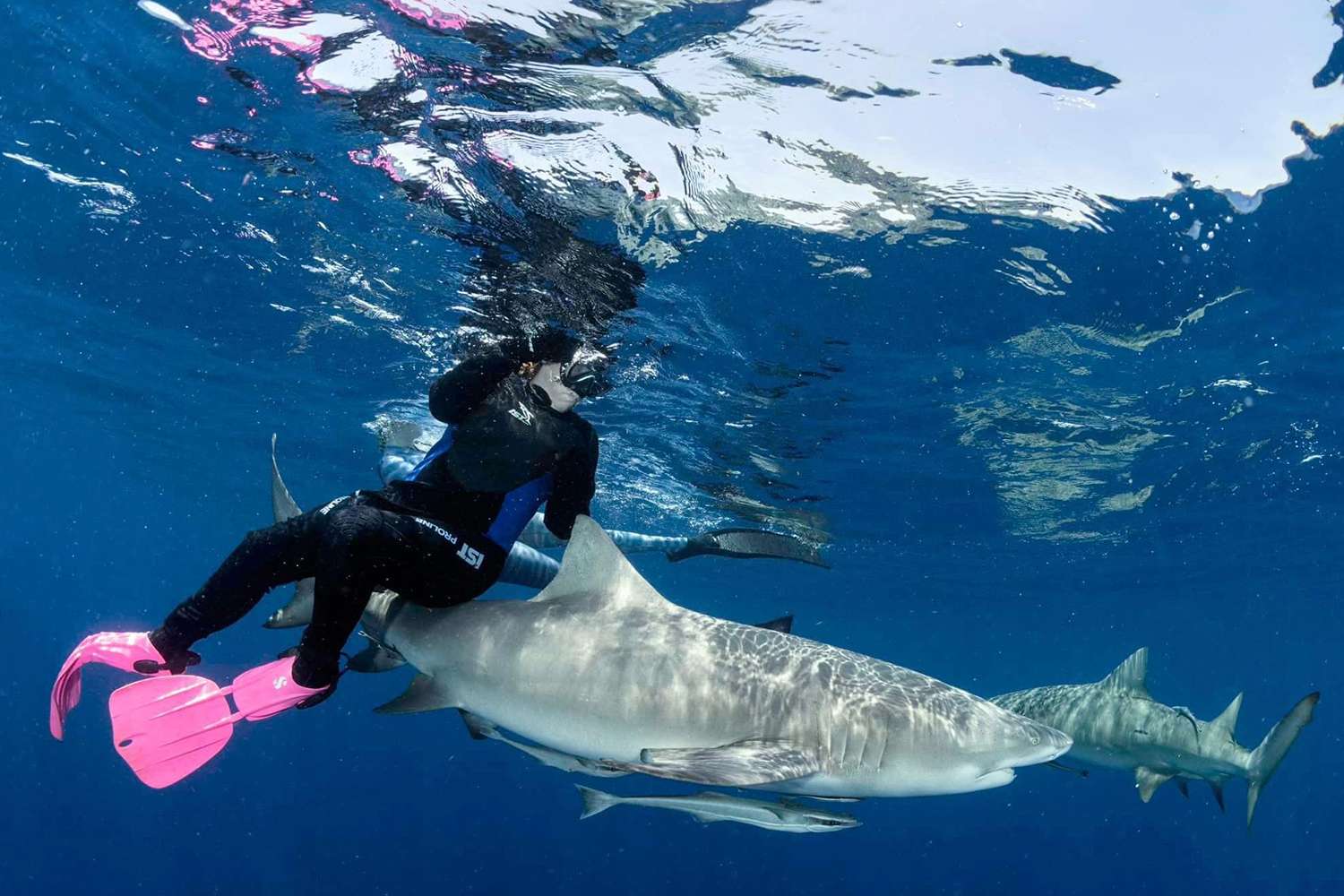
Brittany Badahss swimming with a shark.Credit: WanderPix Japan
Brittany Badahss and Bettina Kelley run the social media account DiveDiveLIVE, where they livestream their deep-sea dives
Their goal is to help younger viewers overcome fears and connect with marine life
Recently, the friends gave up most possessions to travel internationally with roughly 100 pounds of diving and camera equipment each
Brittany Badahss and her friend Bettina Kelley take viewers to places most people will never see firsthand.
Through their social media account, DiveDiveLIVE, the friends travel the world to livestream their underwater adventures, from swimming alongside a pregnant 16-foot tiger shark to witnessing an eel battle a much larger fish. But their goal extends beyond capturing extraordinary encounters.
“A big target audience of ours right now is younger people and trying to get younger people more invested in the ocean,” Badahss, 36, tells PEOPLE exclusively over Zoom.
For Badahss, that mission is personal. Although she grew up surrounded by the ocean in Hawaii, she says she was once afraid of sharks and deep water. Around age 29, after quitting drinking, she began kayaking. During one outing, whales breached near her kayak, sparking an interest in the ocean.
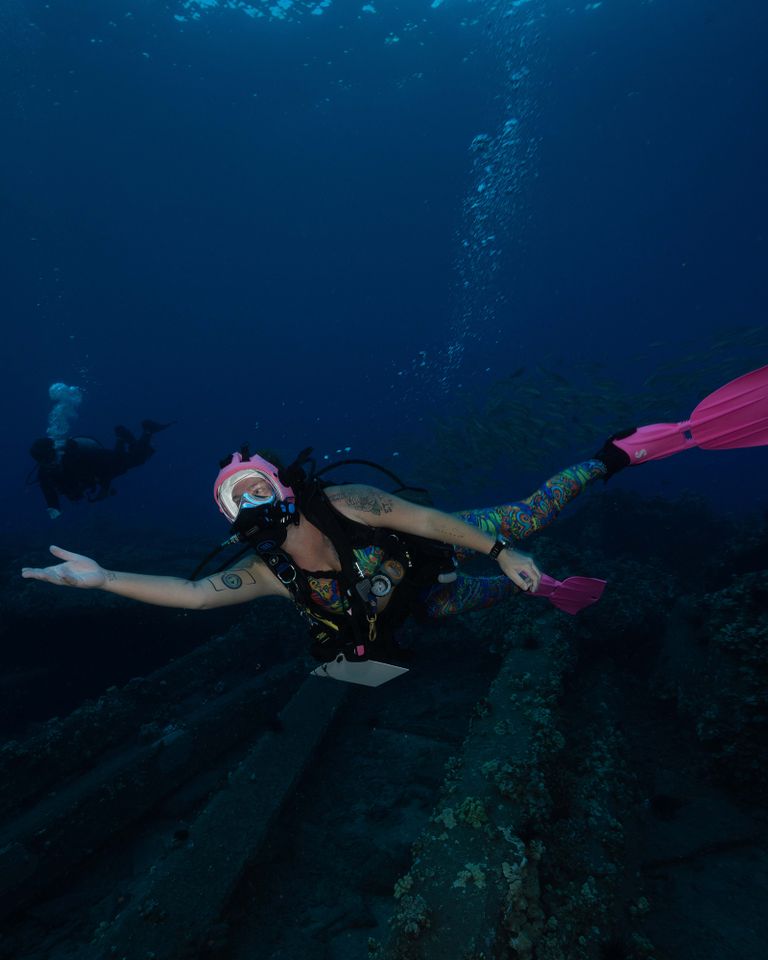
Brittany Badahss during a deep sea dive.Credit: WanderPix Japan
Eventually, she returned to school to study marine biology. Though she didn’t finish her degree, she got scuba certified. Kelley, 43, had her own path to the water. She had lived in Maui for 15 years before getting scuba certified alongside Badahss.
As the two women spent more time diving together, they began thinking about how to share their underwater experiences with people who couldn’t join them in person. Turning that idea into a livestreaming project; however, required more than simply bringing a camera underwater.
The friends had to research equipment, work through technical challenges and figure out how to broadcast from beneath the surface.
“I thought we were doing this like... It is so innovative and it’s so cool,” Badahss says of the early days. “And we’ve spent so long trying to like figure this out and bring the ocean to people.”

Their first underwater livestream attracted only about 30 viewers. But the friends kept going, eventually logging roughly 100 livestreams before a night dive off Maui gave them a moment they wouldn’t soon forget.
Around midnight, they spotted an eel attacking an enormous fish, which Badahss identified in the interview as an Achilles tang. The encounter lasted four or five minutes as the eel appeared to take on a fish too large to fit in its mouth.
Badahss was audibly freaking out as the scene unfolded. Meanwhile, their audience surged from roughly 30 or 40 viewers to 7,000 or 8,000 in about a minute, she says.
“It was the craziest thing,” she recalls.
The encounter helped bring new viewers to DiveDiveLIVE, many of whom returned for future broadcasts. As the audience grew, so did the opportunities for viewers to participate, asking questions, identifying sea creatures and sharing in the friends’ discoveries in real time.
The women have since built an international audience numbering more than 3.14 million across Instagram, TikTok, YouTube and Facebook.
Rather than presenting themselves as experts who know everything about marine life, Badahss and Kelley make learning part of the experience. Their equipment allows them to communicate with viewers on land while underwater, and the comments often become a collaborative identification game. Viewers have helped them recognize everything from baby barracuda to different types of clownfish.
“I feel like this education and this hanging out and naming the sea creatures with us and just spending hours underwater with us is getting people over that base fear everyone seems to have,” Badahss says. “I used to have it too, trust me.”
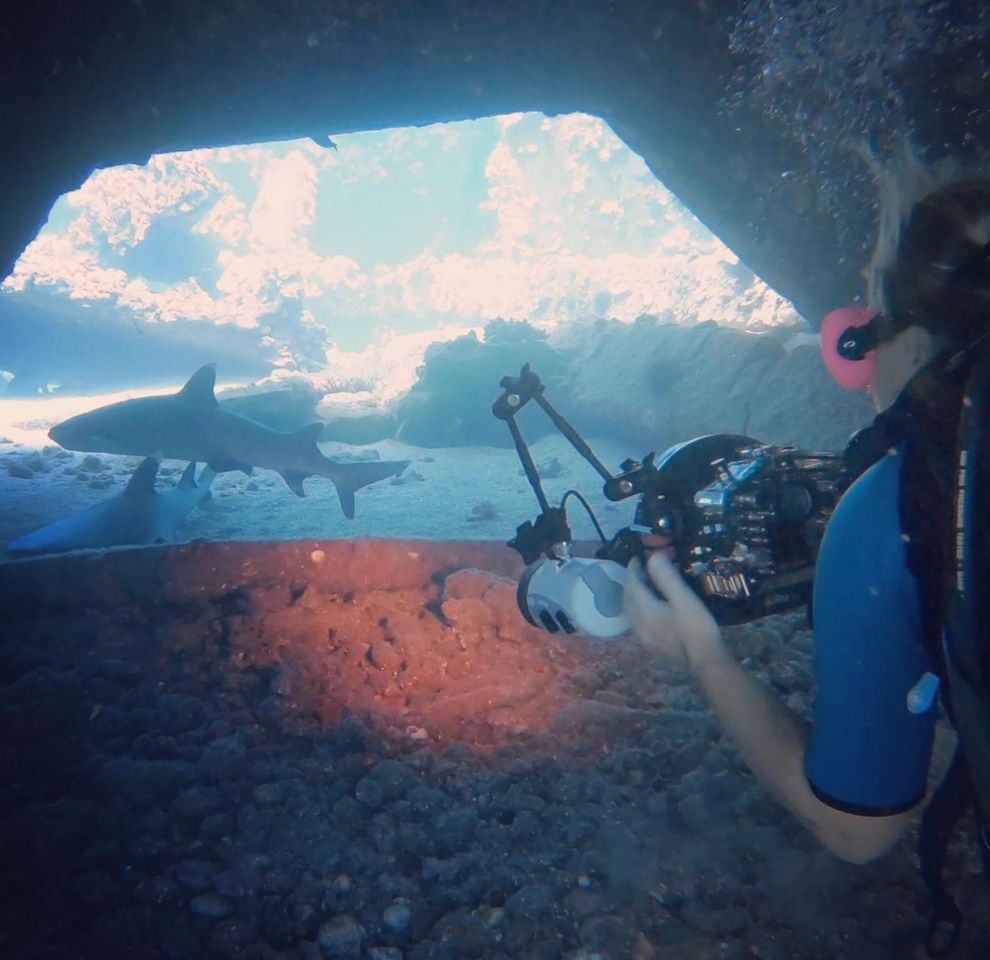
DiveDiveLIVE creators while livestreaming a dive.Credit: Jeff Joal
Bringing viewers along requires considerable preparation.
The friends often visit dive sites at unusual hours to avoid crowds, carrying their equipment into the water before starting a livestream and descending. Their full-face communication masks allow them to speak underwater and read comments so they can respond to questions while exploring.
They typically spend 50 to 90 minutes underwater, carrying roughly 100 pounds of gear per person, including about 20 to 30 pounds of camera equipment.
All that preparation allows viewers to witness encounters they might otherwise never experience. For Kelley, one of her favorite dives took place in Florida, where she encountered a pregnant 16-foot tiger shark. During the livestream, she says, she was able to redirect the shark several times.
Badahss’ most memorable experience, meanwhile, happened closer to home in Hawaii. During one particularly clear dive, fish and turtles filled the water around her before a Hawaiian monk seal swam alongside her, approached her camera and later returned to play nearby.
“I loved that thousands of viewers experienced it with us live,” she says.
The friends have also encountered endangered marine life, including sea turtles. By bringing viewers along for these experiences, they hope to encourage a greater appreciation for the animals and the environments they inhabit.
Spending so much time underwater also means facing unexpected risks. During a dive in Florida at a depth of about 60 feet, Badahss found herself struggling to breathe while surrounded by lemon sharks, which she describes as relatively harmless and around 10 feet long.
The problem, she says, involved her air supply. The group had been diving with tanks that the boat company recently swapped out, though Badahss isn’t entirely sure what went wrong. She acknowledges that there may have been mistakes on both her part and the company’s.
As she struggled to draw air through her full-face mask, Badahss tried to get the dive master’s attention and indicated that she needed to remove it. She then attempted to use her backup regulator, but says no air was coming through. Without her mask, she couldn’t see her dive computer, either.
Another diver tried to share air through his secondary regulator, but Badahss says he couldn’t get it into her mouth. He ultimately brought her quickly to the surface.
When they later reviewed the livestream footage, Badahss says they estimated she had gone roughly two and a half minutes without breathing.
“I was just nuts because we got to the surface, and I was fine,” Badahss says. “I was conscious. I was breathing fine. I was like super thankful to him. I was really bummed I missed that dive... But yeah, that stuff does happen on livestreams.”
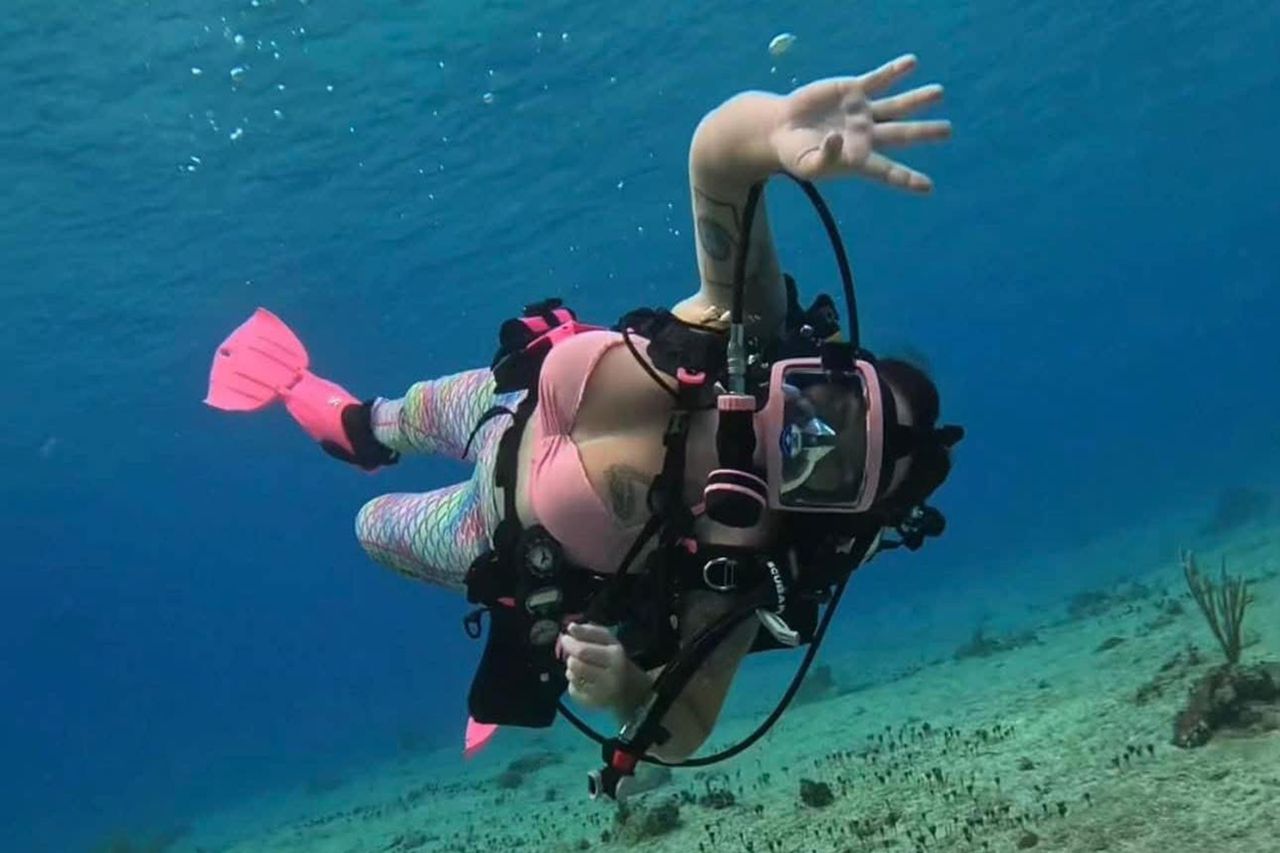
DiveDiveLIVE creator Brittany Badahss while diving.Credit: WanderPix Japan
That wasn’t the only time an encounter underwater left the friends uncertain about what they were seeing. While diving in Japan, they spotted several black-and-white striped animals near the surface that they initially thought might be sea kraits, a type of venomous sea snake.
Kelley, who says she dislikes snakes, says the moment made her feel uneasy.
While they were not snakes at that point, Badahss recalls running into “a bunch of” the snakes and thinking, “I’m like, ‘Bettina is going to freak out and all these snakes around us.’ “
“It was her worst nightmare,” Badahss adds.
Despite the occasional scare, the friends continue to travel in search of new dives and new experiences to share with their audience.
Their commitment to DiveDiveLIVE has reshaped their lives outside the water, too. They recently gave up nearly all their possessions to travel around the world, fitting their diving equipment, livestreaming gear and personal belongings for their families into just six or seven suitcases.
Moving between destinations can mean navigating flights, trains and buses — sometimes with long walks in between — while hauling their equipment. Badahss’ two daughters, ages 10 and 12, are homeschooled and travel with her. Kelley’s children are older: Her 18-year-old daughter joined the group for the first six weeks before returning to Maui, while her other child is 22.
“My baby girls think this is the coolest thing in the whole world,” Badahss says.
At the time of their interview, they were in Okinawa, Japan, and planned to head to Taiwan in the coming weeks, including a visit to a sea turtle sanctuary on an island about three miles long. Although they maintain a home base in Hawaii, they don’t plan to return for a few years.
Neither has a rigid plan for what comes next. Badahss, though, says she’s working toward getting her daughter scuba certified.
“I’m 36, I’m almost 40,” she says. “So at this point in time we’re just going with it. We’re rolling with it.”
“The whole goal of it is just to show people the real ocean,” she adds, “and say like it doesn’t really matter how old you are. It doesn’t really matter how scared you are.”
Source: Nature