'Handsome' ponies helping delicate flowers thriveSamantha Jagger - North East and CumbriaMon, October 19, 2026 at 4:58 AM UTC

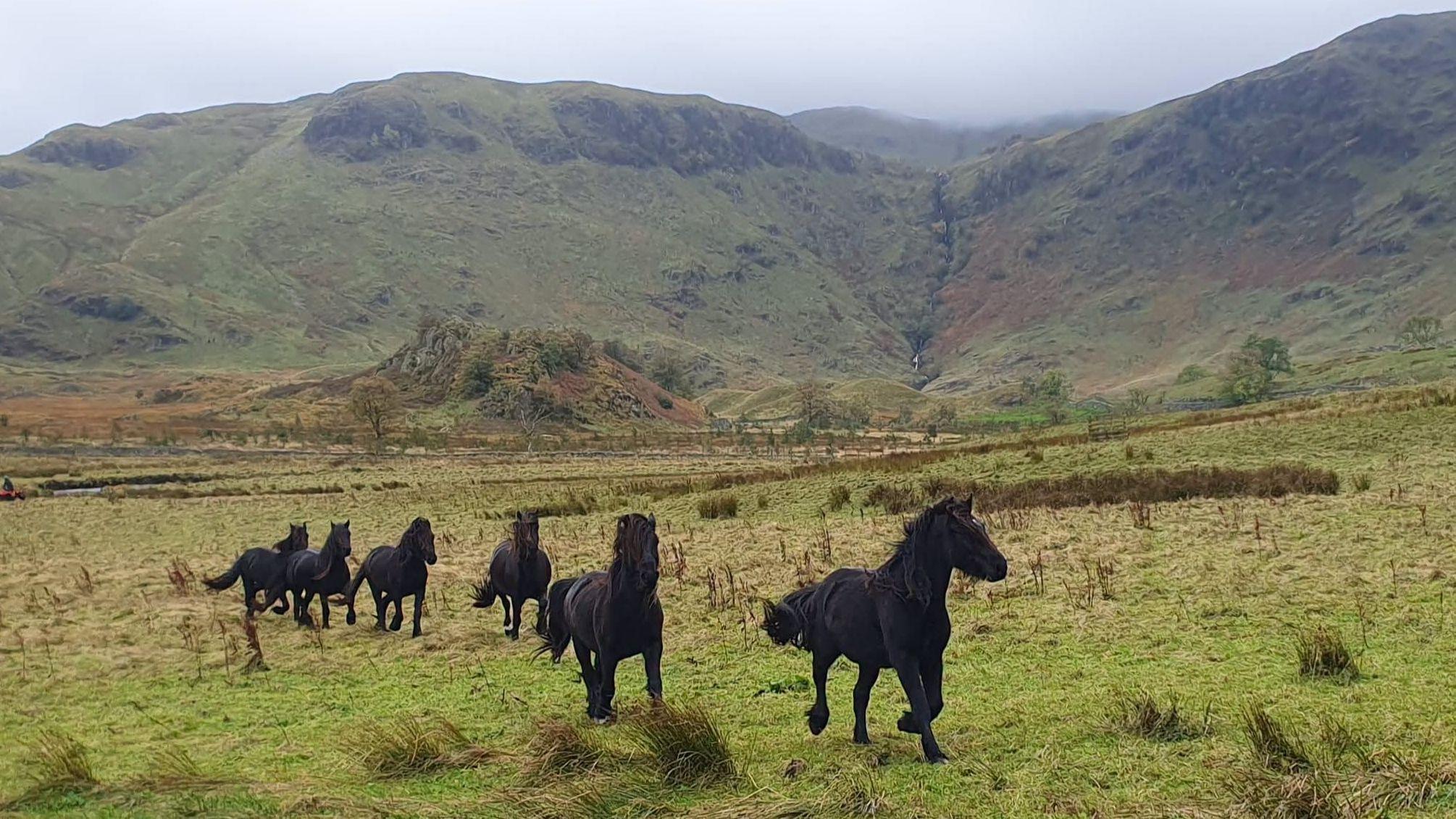
There are currently six Cumbrian fell ponies roaming the Swindale ValleyFell ponies are trampling vegetation in the Swindale Valley to try to help delicate flowers thrive.
Two fell ponies have joined a herd to trample dominant vegetation to try and help delicate flowers thrive.
Annabel Rushton, site manager of RSPB Wild Haweswater, said the native Cumbrian fell breed were "ideally suited" to the rugged terrain and weather in Swindale Valley, where they would graze and crush rushes and coarse grasses.
Wild Haweswater said the grazing project would aid delicate wildflowers like Devil's Bit Scabious and the ponies were good at spreading wildflower seed in their dung.
Rushton said the two "handsome boys" William and Jasper, would join four mares to live outside, drink from streams and springs and shelter behind dry stone walls and under trees.
Rushton said native breed cattle and Cumbrian Fell Ponies were used in the project because these "large, heavy-footed animals" emulated "the wild herbivores that would have roamed the UK for thousands of years before the bronze age".
"Their grazing and trampling helps to tackle denser, more dominant vegetation such as bracken which allows more diverse, delicate plants to grow through, as well as young trees getting the chance to take off," she said.
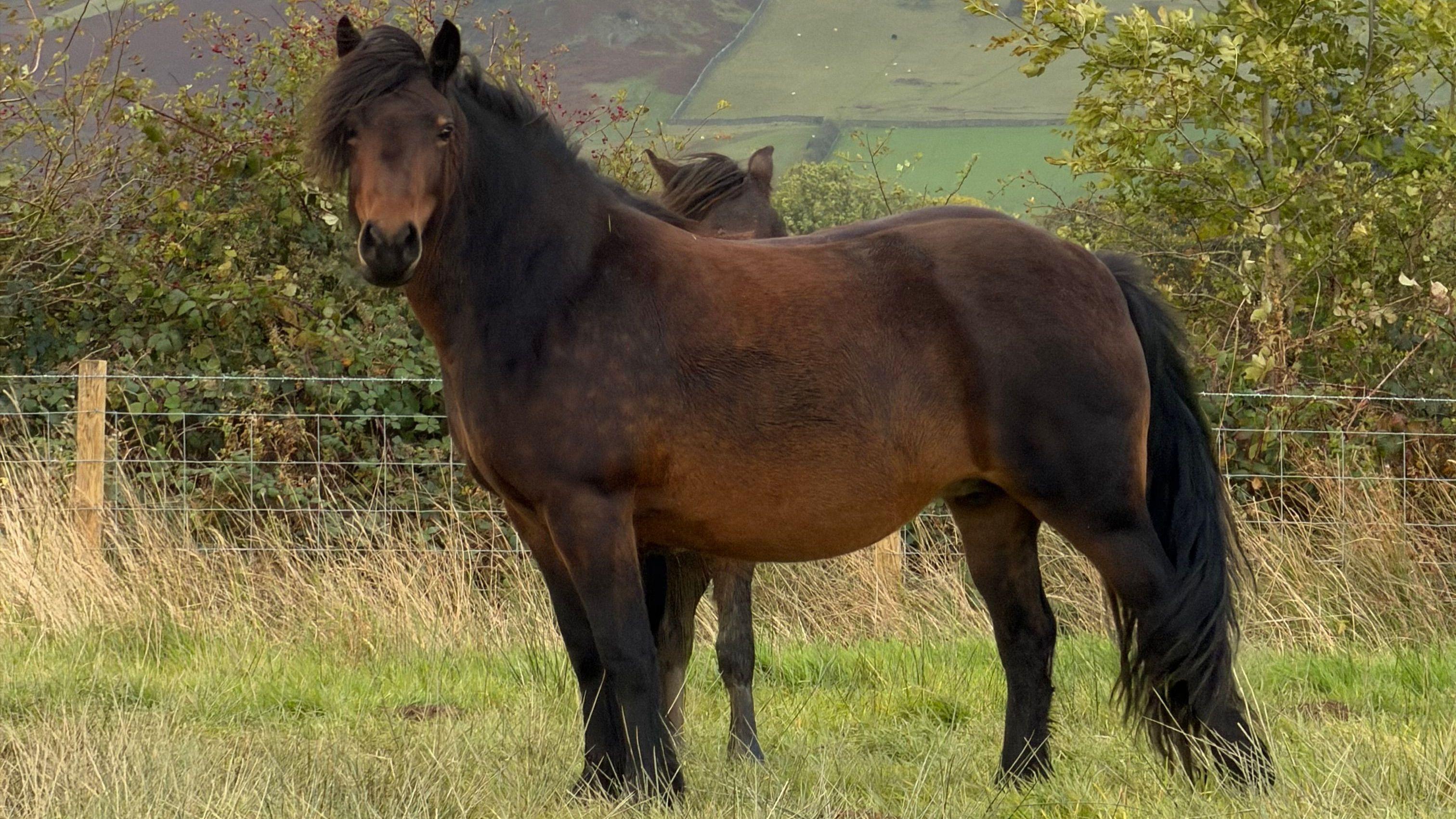
The native Cumbrian fell breed were "ideally suited" to the rugged terrain, RSPB Wild Haweswater said
Rushton said thanks to the project, there was an abundance of Devil's-bit Scabious plants "coming through".
"This is the food plant of the Marsh Fritillary butterfly, a species that was nearly extinct in Cumbria in the early 2000s, but has since made a comeback," she said.
There are six fell ponies grazing in Swindale on loan from Helmside Fell Ponies.
"Unlike many fully domesticated horses, that need their feet trimming every six weeks, these fell ponies are mostly able to wear their hooves down naturally on rough ground, so need minimal interventions.
"Apart from feeding them wildflower hay from our meadows in the worst winter weather, they don't get fed any supplementary feed," Rushton said.
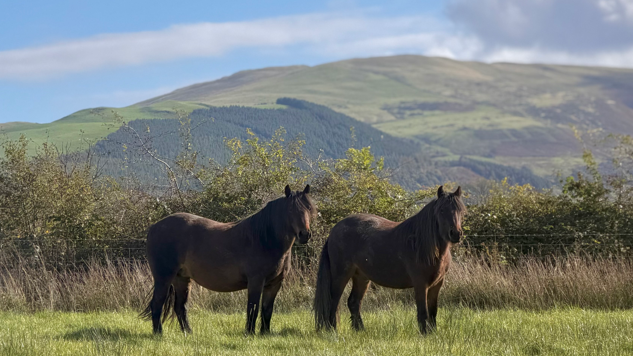
Fell ponies are mostly able to wear their hooves down naturally on rough ground
Chair of the Fell Pony Society conservation grazing sub-committee, Christine Robinson, puts land owners and managers in touch with members to arrange pony loans.
She said "not many people are aware of how useful fell ponies can be" in conservation grazing and there had been recent successes.
Rowan Bowman, who owns the Liddlepark Fell Pony Stud in North Cumbria, has had her land grazed by fell ponies for five years.
"Rowan recently had her land assessed for the Higher Tier Countryside stewardship scheme and a greater variety of plants, invertebrates and bird species were recorded there," Robinson said.
Follow BBC Cumbria on X, Facebook, Nextdoor and Instagram and listen to Radio Cumbria on BBC Sounds.
How a river was given a 'wiggle' and got its fish back
Barn loft transformed to support bat colony
'Most people only encounter badgers with roadkill'
How native breeds 'restore and protect' landscapes
Related internet links
Wild Haweswater
Source: Nature