Zebra Risks Running Straight Through a Lion Pride, How Did It Get Away?Andrew Clemente Sun, October 18, 2026 at 9:50 PM UTC

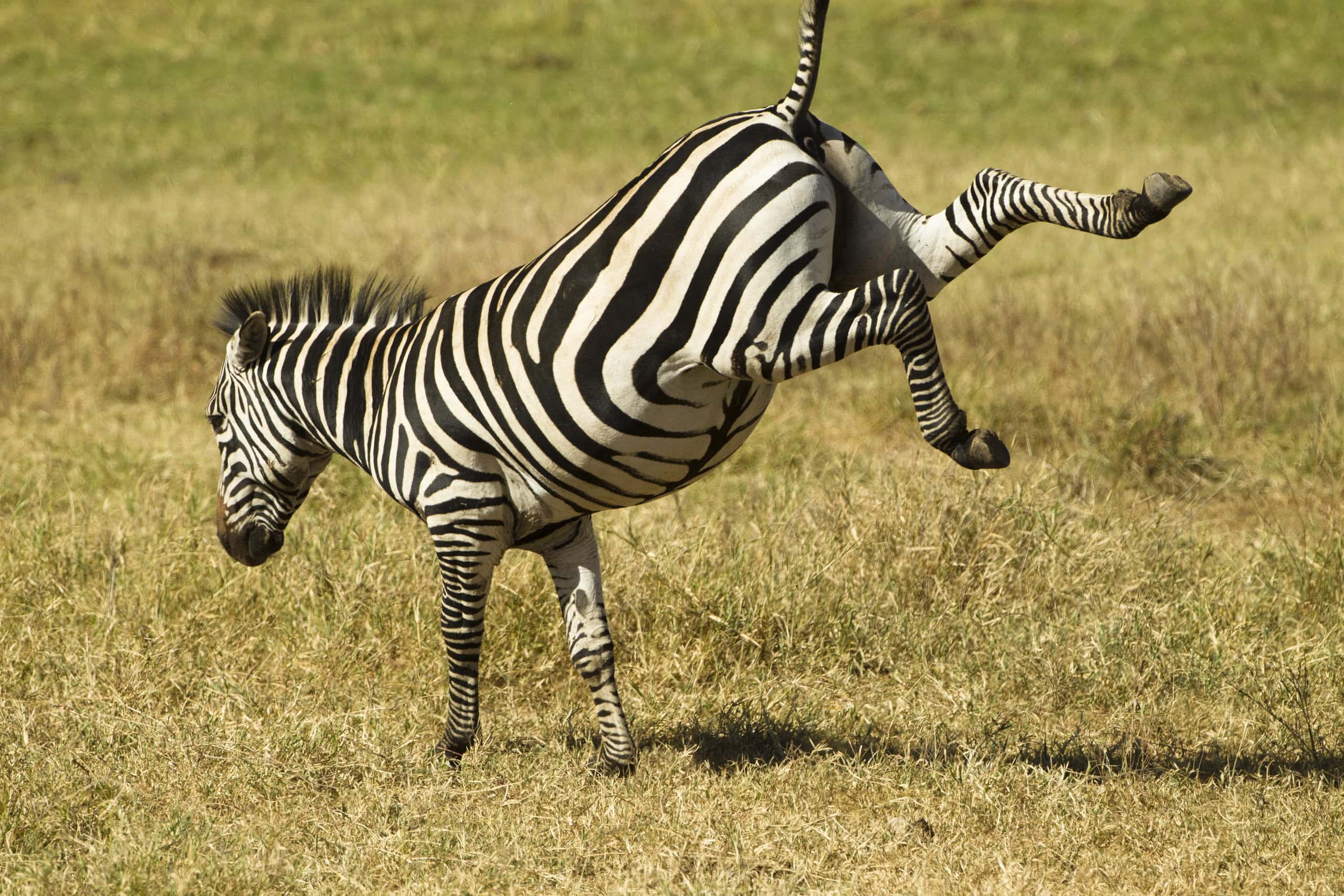
Common Zebra, Equus burchelli, kicking up its heels, Ngorongoro Crater, Tanzania, Africa© Joe McDonald/Shutterstock.com (© Joe McDonald/Shutterstock.com)
Most footage of lion prides hunting zebras begins with careful stalking and ends with one animal running for its life. This clip skips the quiet part. A zebra charges straight into a cluster of lions, slips past one set of paws after another, and somehow emerges from the other side still moving.
The escape looks like a pure display of speed, but the more interesting answer is happening in the turns. The zebra never gives every lion a clean line to attack, and none of them gets the secure hold needed to drag it down. By the time the pride reorganizes, its intended meal is already headed toward open ground. The entire sequence is fast, messy, and a useful reminder that a hunt is not over merely because the predator gets close.
Watch the Zebra Escape the Lions BelowDid the Zebra Really Run Through the Pride?
That is exactly what the visible portion of the video shows. The zebra approaches from the left and passes between multiple lions rather than turning away from the group. Several cats pivot, swipe, or lunge as it moves through them, but the zebra remains upright and continues beyond the cluster. No lion appears to establish more than momentary contact.
What the short post does not provide is equally important. It does not identify the location, date, individual animals, or what happened before and after the edited sequence. The lions may already have been pursuing the zebra, or the animal may have been forced toward them by terrain or other members of the pride outside the frame. We can describe the extraordinary escape without inventing a backstory for it.
The decision to run through the group may look irrational from a human perspective, but a fleeing animal works with the openings available in that instant. Turning toward what appears to be a gap can be safer than making a wide, predictable arc with a lion already close behind. The zebra needed only one usable route. The lions needed one clean tackle, and none of them got it.
Can a Zebra Outrun a Lion?
Not as easily as the familiar internet speed charts suggest. A major field study published in Nature examined thousands of high-speed runs by lions, zebras, cheetahs, and impalas in Botswana. Within both predator–prey pairings, the predators demonstrated greater speed, acceleration, and deceleration capacity than the animals they hunted.
That does not make capture automatic. Lions depend on a short, explosive attack because sustained pursuit is costly, and their advantage matters only if they can convert it into contact. A zebra that spots the danger early may increase the gap, force the lion to spend energy, or reach terrain that breaks the pursuit. In this video, the zebra is already extremely close to several lions. Its immediate problem is not winning a straight race; it is surviving the first few strides.
Once it clears the group, the equation changes. Every extra stride gives the zebra more room to react and forces the lions to accelerate, align themselves, and close the distance again. Lions are fully capable of catching zebras, but they are not interested in spending unlimited energy on a low-probability chase. If the first attack fails and the gap keeps growing, abandoning the attempt can be the smarter choice.
Why Can Sharp Turns Save a Zebra?
The same Nature study found that escape can favor prey at lower speeds, when the fleeing animal has a wider range of possible directions available with each stride. At maximum speed, turning options narrow. A predator can anticipate the path and use its superior acceleration or braking ability to stay close. Slowing just enough to cut sharply creates uncertainty and may force the pursuer to overshoot.
That principle is visible throughout the clip. The zebra angles between lions, adjusts its path as they converge, and never settles into a long straight line until it has passed the immediate danger. Each cat has only a fraction of a second to judge where the zebra will be. One missed step also interferes with the next lion’s approach, turning the pride itself into a temporary obstacle course.
Speed still matters, of course. A slow animal would not survive long enough to use those openings. The escape comes from combining speed with timing, balance, and rapid changes of direction. That is why a list of supposed top speeds cannot predict the outcome of a real hunt. The fastest animal does not automatically win; it still has to be moving in the right direction.
How Do Lions Hunt as a Group?
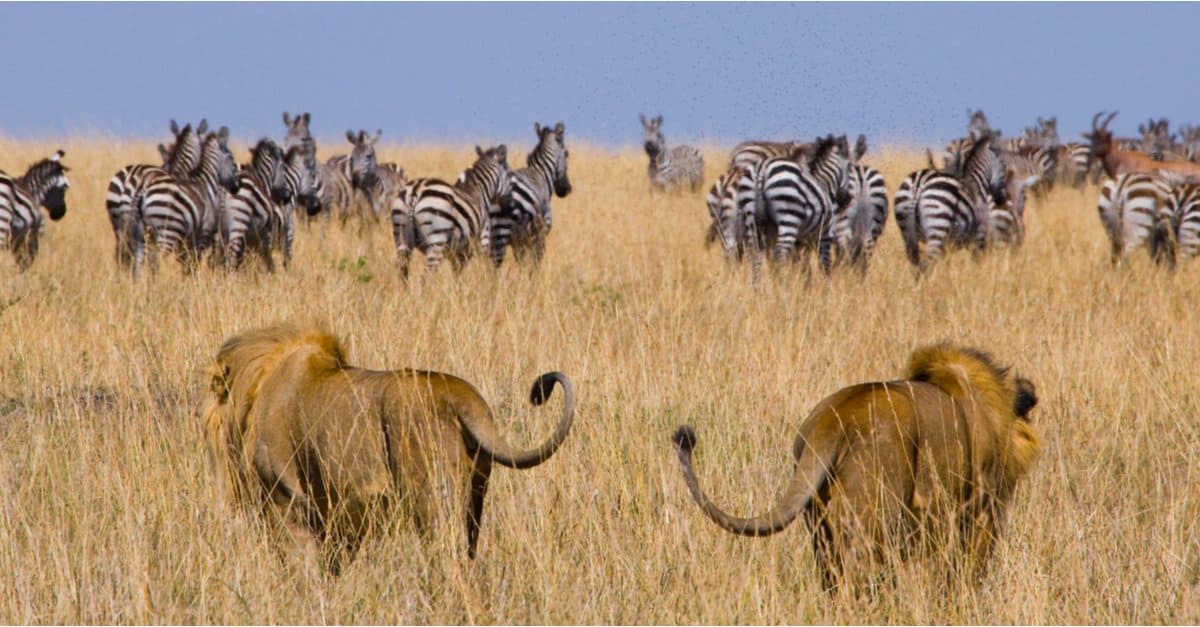
Lions usually rely on stealth and a short attack rather than an extended chase.©GUDKOV ANDREY/Shutterstock.com
Female lions are the primary hunters in most prides, although males hunt as well. According to the Smithsonian’s National Zoo, lions hunt cooperatively and pride mates often separate into smaller subgroups. Hunters may fan out, approach from different directions, or move prey toward another lion positioned to attack. The arrangement can resemble teamwork without functioning like a perfectly rehearsed play.
Group size does not guarantee success. Participation varies among individuals, and additional lions do not improve every kind of hunt equally. Zebras are large, alert, and dangerous enough to injure a predator with a kick. A lion has to get close, seize the animal, and help bring it down while avoiding hooves. In the clip, the pride gets the proximity it needs but never achieves the control required to finish the hunt.
What Do Lions Normally Eat?
Lions are carnivores that feed primarily on other animals. Across Africa, their prey commonly includes medium and large hoofed mammals. Zebras, wildebeest, buffalo, warthogs, and impala may all appear on the menu, depending on the habitat and which animals are locally available.
Lions also take smaller prey, scavenge carcasses, and steal kills from other carnivores when the opportunity arises. Their flexibility is useful because hunts fail regularly and success varies dramatically with prey, cover, weather, group composition, and the starting distance of the attack. This pride came remarkably close to a zebra and still ended the sequence empty-handed. For the zebra, “close” was good enough.
Source: Nature