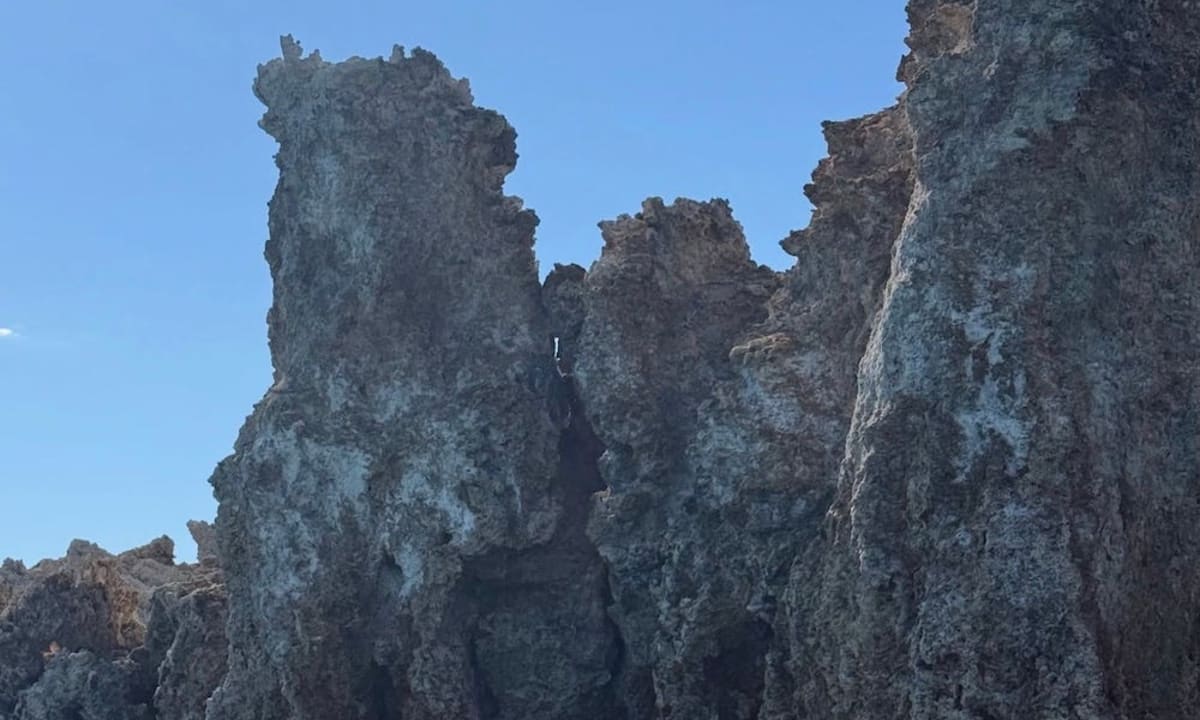
Can you spot the great horned owl roosting in tufa tower at Mono Lake?Pete Thomas, For

"It's easy to see why an owl would choose this spot. We barely noticed the bird!"
Mono Lake is known for its tufa formations and towers that lend an otherworldly appearance to the ancient waterbody in California’s eastern Sierra Nevada region.
The calcium-carbonate formations are used by roosting ospreys and owls, and on Thursday the Mono Lake Committee shared images that show a great horned owl blending into the formations.
Can you spot the great horned owl in the accompanying image? (Answer below.)
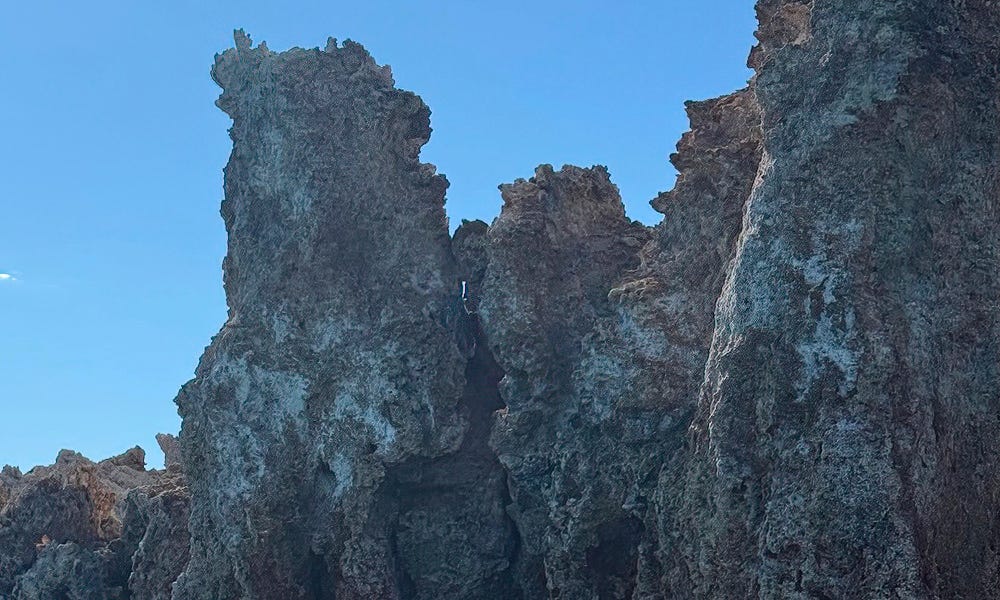
Great horned owls, with ear-like tufts atop their heads, are common throughout North America but camouflage expertise can make them difficult to spot.
They hunt predominantly at night, preying on birds and mammals as well as scorpions, mice, and frogs.
ALSO: 'Epic' bison stampede like a scene from the Old West... almost
Mono Lake, which formed more than 760,000 years ago, is a saline lake near the town of Lee Vining, visible from U.S. 395.
The Mono Lake ecosystem has suffered from water diversions to Los Angeles and the Mono Lake Committee’s mission is to protect and preserve the lake and nearby habitat.
Tufa forms underwater as calcium-rich freshwater springs mixes with carbonate-rich lake water.
The Committee explains on its website: "As the calcium comes in contact with the carbonates in the lake, a chemical reaction occurs, resulting in calcium carbonate, or limestone.
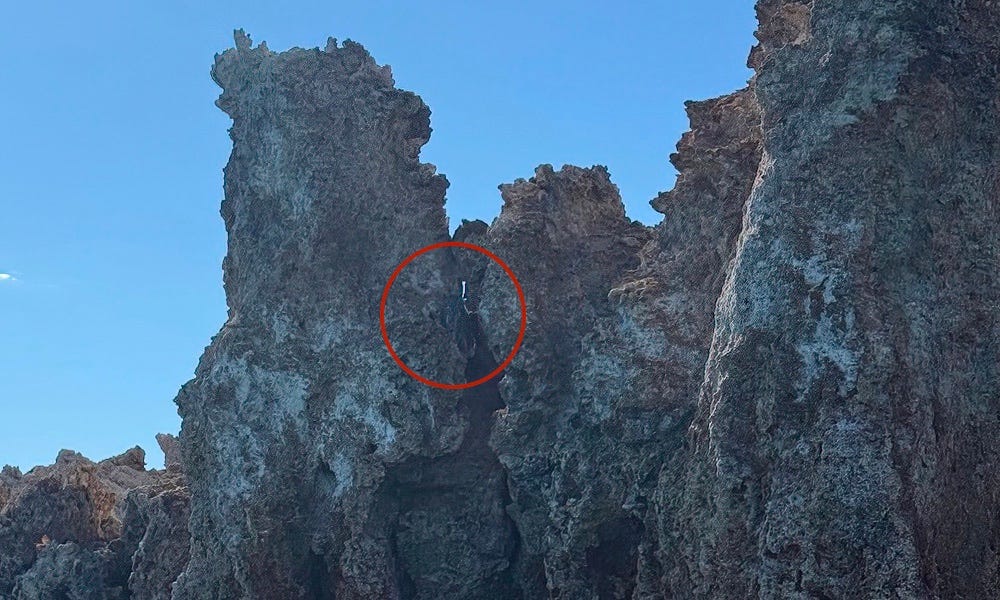
"The calcium carbonate precipitates around the spring, and over the course of decades to centuries, a tufa tower will grow. Tufa towers can grow to heights of more than 30 feet underwater.” (Quiz answer below.)
Tufa towers became exposed by Los Angeles Department of Water and Power diversions that began in 1941.
Brine shrimp and alkali flies thrive in Mono Lake, attracting millions of migratory birds besides the birds of prey that roost in tufa towers.
The accompanying Instagram post includes closeup images that reveal the owls's location, but the owl is within the red circle, just left of the narrow opening, in the image posted below.
This article originally appeared on For The Win: Can you spot the great horned owl roosting in tufa tower at Mono Lake?
Source: Nature