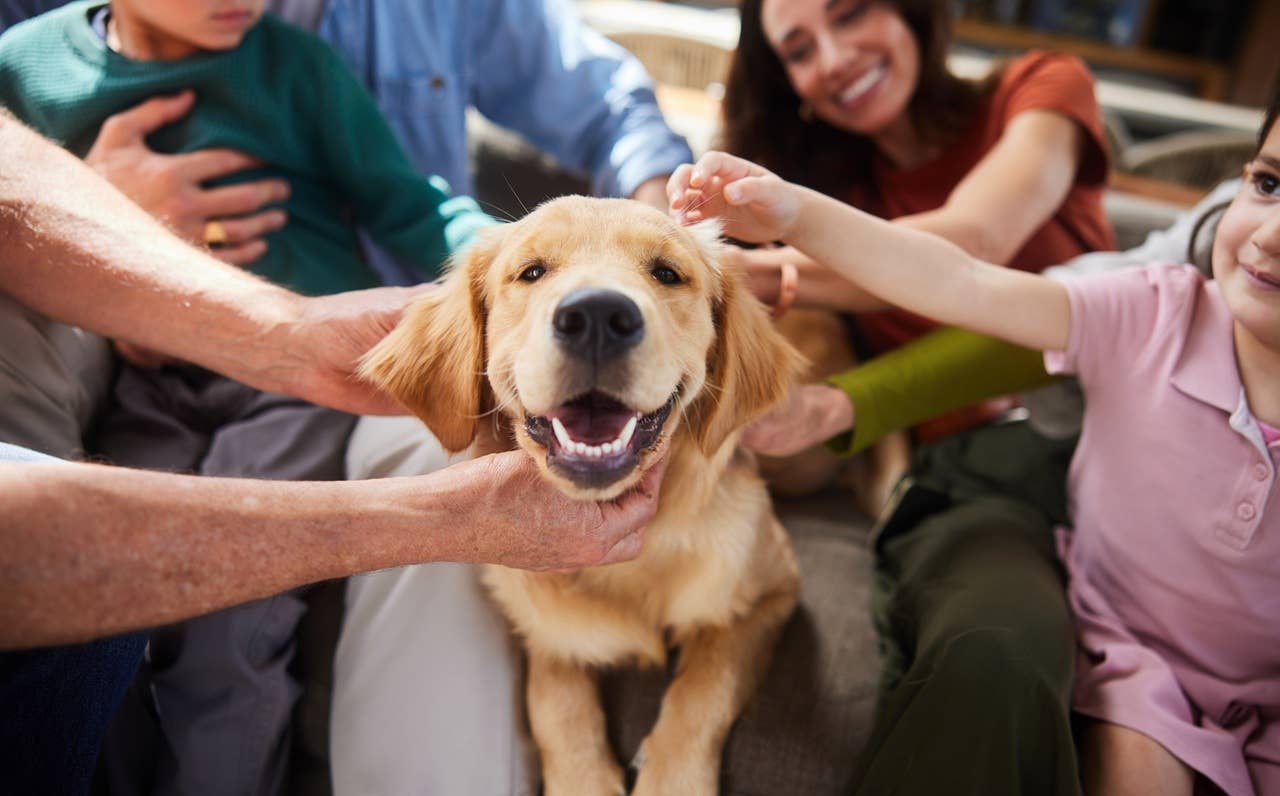
Want a Dog That Fits Your Lifestyle? Trainers Say Look for This 1 Simple Sign

From temperament testing and trial adoptions to the most loving, adaptable breeds, two dog experts share how to pick your ideal furry companion.
Bringing home a new dog or puppy is one of the most exciting things a family can do. After all, dogs bring a lot of joy to a house and contribute to years of special memories. But all dogs are not the same—and finding the perfect one for you is essential to ensure you and your new pup will enjoy a lifetime of happiness together. So, how can you choose the best family dog for your home? And how can you pick a puppy that you can bond with and have an amazing relationship with?
The truth is, there’s not one dog breed that’s ideal for every person because people have different lifestyles. However, that doesn’t mean there’s not a way to know what pup you should get so you will have to struggle to address any incompatibility after you get them.
No matter if you’re about to be a first time dog owner or you just want some expert advice about choosing the right dog, we have you covered. To help you out, we reached out to Sally Grottini, who has 30 years’ experience in dog obedience and behavior training and is a JustAnswer Dog Training Expert, and Kaitlyn Azemar, a certified dog trainer with Dogtopia. Together, they are sharing their top tips for choosing a dog. That way, you’ll feel more confident when you’re making your decision. Because becoming a dog parent is a big responsibility and it all starts before you bring your furbaby home with you.
#1 Tip From Experts to Choose the Perfect Dog for You
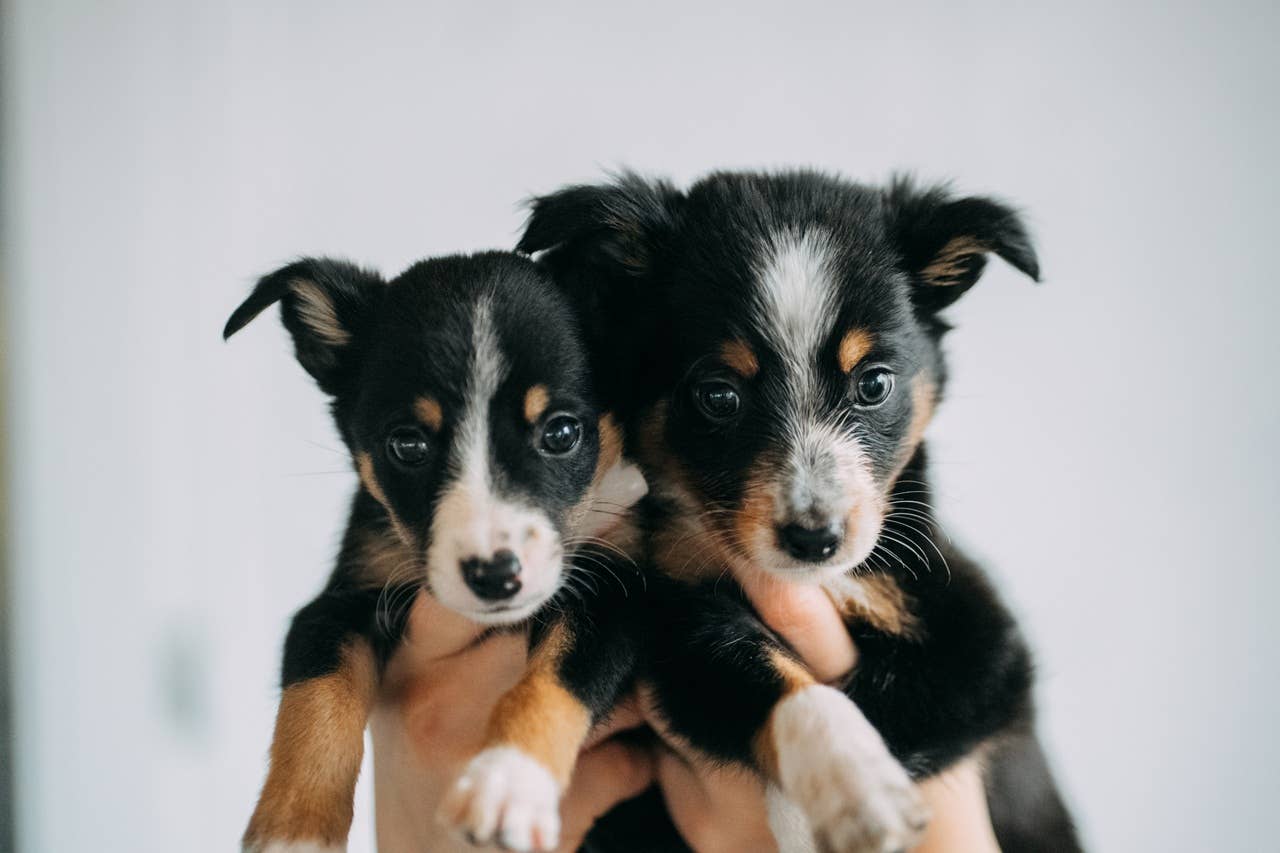
Two puppies that are up for adoption.Getty Images Svetlana Repnitskaya
If you’ve been asking yourself, “What dog breed is best for me?” you’re not alone. A lot of dog lovers wonder the same thing. The good news is, there is one thing pet experts say can help you narrow down your choices. In fact, both our experts reveal you should disregard the dog breed and instead gauge a dog’s temperament first. By doing so, you can consider how their personality will fit in with your family, which they note s by far the most important factor to consider.
Grottini recommends asking for a temperament test on any dog you’re considering before bringing it home. If you’re adopting from a shelter or rescue that cannot perform a temperament test, she suggests asking a trainer to come meet the dog you like and have them do it for you.
After all, a dog’s temperament can provide insight into what it will be like to live with them, as well as highlight any potential challenges or behaviors they may have to work through, which may reveal a deal breaker for you.
“If it is an older dog, you want to make sure it has no possession aggression toward items, especially if kids are in the home,” Grottini explains.
Azemar is a big proponent of trial adoptions, which you may not know is an option if you’ve never been a pet parent before. A trial adoption allows a dog to live with your family for about a week or sometimes longer, so you can make sure they are the right fit before you fully commit. However, the availability and terms of trial adoptions vary by shelter or rescue.
It’s also important to ask a lot of questions. “If you’re buying from a breeder, my biggest tip is to work with the breeder to pick the right puppy for you,” Azemar says. “The breeder has had these puppies for at least 8 weeks and likely knows them like the back of their hand. Early life-stage puppies show signs that are indicative of the type of dog they will be. Knowing your lifestyle and what you’re looking for ahead of time can help the breeder pick out the best puppy for you.”
Azemar warns that you also want to be wary of breeders who allow you to pick any puppy from a litter and take them home, as that is something that can set you and the puppy up for failure. “A good breeder will have a few options from a litter that will fit your lifestyle, and a few that won’t,” she says.
What to Consider When Choosing a Dog Breed
Making a good dog breed lifestyle match takes a fair amount of research and some soul searching. It’s important to keep in mind that every dog breed is not going to be right for every family. So, before you start scrolling through adoptable dog listings or calling breeders, you’ll want to back up a few steps. Grottini highlights some of the most important factors to consider when you want to get a dog.
Activity Level
When it comes to a four-legged sidesick make sure you know how energetic they are and how much playtime and exercise they need to thrive.
“Remember that some dog breeds are very energetic, while others are more laid-back,” Grottini notes. “If you don’t have the time or desire to provide hours of daily exercise for your future dog, look for a breed that has moderate or low exercise needs.”
By doing so, you’ll both be much happier.
Size
Dogs come in all shapes and sizes, from teeny tiny lap dogs to giant companions.
“Although small dogs can be just as lively as large dogs, their size can make it easier to meet their exercise needs in a smaller space,” Grottini says. “For example a 10-pound energetic dog might get plenty of exercise playing fetch in your house or a small backyard. However, an 80-pound energetic dog will need considerably more space to get the same amount of physical activity (and might need to be taken out jogging or hiking).”
Shedding and Grooming
Most people don’t consider what kind of coat their future dog will have, but it’s something experts say can make a difference once you have them. So it’s better to think about that before you commit to a pup who is high-maintenance.
“Although there are some exceptions, most non-shedding or low-shedding breeds have high grooming needs, requiring frequent brushing and professional haircuts,” explains Grottini. “On the flip side, most dogs with wash-and-wear coats shed a little or a lot, whether they have short or long coats.”
Breed Health
Of course you want whatever pup you add to your family to have a long life, so you want to be prepared on what you might need to provide for them when it comes to health care.
“With purebreds, most breeds have some known genetic health issues—some breeds have a lot of health issues,” Grottini says. “Breeds with more health problems can quickly drain your bank account if they need costly veterinary care. True mixed breed dogs—the stereotypical “mutts”—might have fewer inherited health conditions, but this varies greatly depending on each individual dog’s genetic makeup. Even Hybrid “designer dogs” with only two breeds in their mix can inherit some or all of the health problems found in both breeds.”
What Dog Breeds Are Not Best for First-Time Pet Owners?
Azemar says instead of asking what dog breeds make the best pets, the better question to ask is, “What dogs do not make good first-time dog breeds?” She says while all dogs can be good pets with the proper care, pet parent and training, some breeds first-time pet parents should avoid as they may need a more hands-on owner would be guardian breeds, such as the Cane Corso, Rottweiler, or Akita. They are generally not recommended for people who have never had a dog before because they are very strong, protective, independent, and challenging for inexperienced owners to manage and train.
“These dogs are known to be very untrusting of strangers, and without prior experience handling a powerful dog, first-time owners will struggle significantly living with them,” Azemar points out. “Another poor choice would be the Belgian Malinois, who has extensive exercise and training needs, and are known to ‘out-think’ their owners. These are great dogs, but they should be left to those who are confident in their handling and training skills.”
What Dog Breeds Are Best for First-Time Pet Owners?
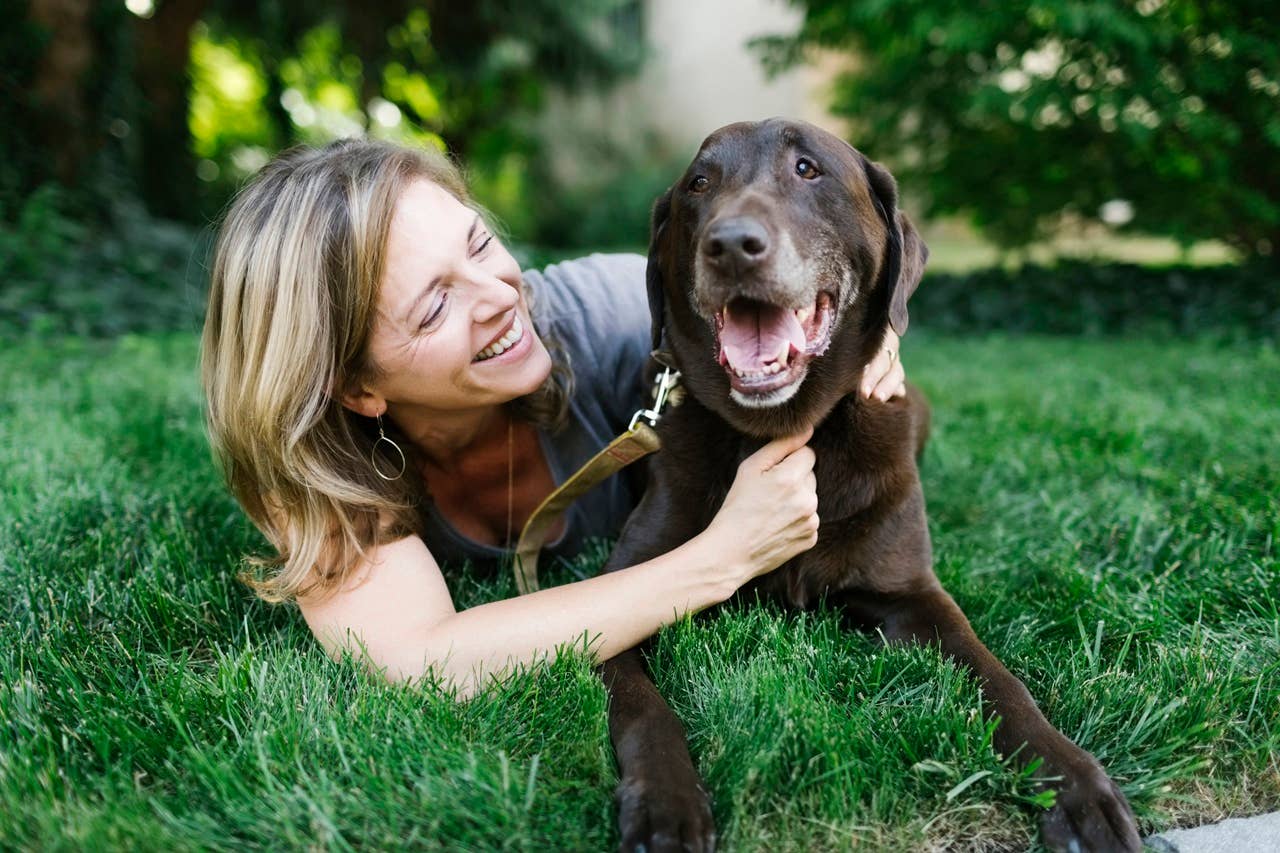
A woman with her perfect dog breed, a Lab.Getty Images Jessica Peterson
If this will be your first dog, experts say it’s helpful to narrow your search to include breeds that tend to be friendly, trainable, adaptable, and generally easy to live with. Azemar points out that the best first-time dog breed is the one you’ve thoroughly researched and are prepared to handle. “Yes, the Labrador Retriever and Golden Retriever are typically ‘easier’ dogs and are usually recommended, however, doing your research and truly preparing for a certain breed is what sets first-time owners up for success.”
Grottini recommends the following breeds for first-time dog owners because of their temperament and ease of training:
Golden Retriever
These friendly, loyal family dogs are easy to train and will stay by your side. Golden Retrievers tend to be patient and affectionate.
Labrador Retriever
The Labrador Retriever is another easy-to-train and loyal family dog. The Lab’s coat is short, so minimal grooming is required. They are friendly, intelligent, and eager to please their owners.
Bichon Frise
The Bichon is a small dog with a low-shedding coat that is considered hypoallergenic. Routine grooming is needed to trim its curly coat, which grows continuously and requires regular maintenance. Bichons are playful, friendly, intelligent, highly trainable, and good for small living spaces.
Poodle
Poodles are highly intelligent and generally easy to train. Their low-shedding coat is considered hypoallergenic. Like the Bichon, Poodles need regular professional grooming. They come in three sizes: toy, miniature, and standard.
Mixed-Breed Dogs
“Don’t overlook a mixed breed,” Grottini says. “Mixed breeds can combine the loving personality of each breed, making them a pleasure to be with. Many are easy to train and there are a variety of coats to choose from.”
Signs You’ve Found the Right Dog for Your Family
You’ve done your research, searched for dogs that might be a good match for your family, and even met some dogs in person. But how do you know when you’ve found the right dog?
“The biggest sign that you’ve chosen the right dog is that the dog adds to your life, not takes away from it,” Azemar says. “When two walks per day doesn’t feel like a chore, and you truly enjoy spending time with your dog, you’ve done something right! Dogs should enhance our lives, not minimize them. And yes, there will be days when the dog makes a mistake. Not every day will be sunshine and rainbows, but the point of getting a dog is to have a companion that is easy to live with.”
Here are a few signs you and a dog are a match made in heaven, according to Grottini.
They are a dog that wants to be with you, but they are not overly attached.
They are a dog that is happy to play with your family and also meet new people.
They are a dog that enjoys learning and shows intelligence.
They are a dog that loves both children and adults alike.
Common Mistakes to Avoid When Choosing a Family Dog

Not all dog breeds are good fits for every person.Getty Images Natalia Ruedisueli
If you want to get a dog, you want to make sure you are getting one for the right reasons. Here’s what pet experts say are the biggest mistakes they see people make when choosing a dog. Avoid these pitfalls, which could lead to issues down the road.
Not Looking at Temperament
The ideal temperament for a family dog is confident, stable, and adaptable. As a result, you’ll want to avoid dogs with temperament extremes and instead look for a dog that falls somewhere in the middle—neither fearful nor overly excitable.
“Many people feel that the shy dog hiding in the corner is a good pick, when in reality, due to anxiety, it can be a nightmare,” Grottini says. “A dog with anxiety could damage your home. A dog that shows any fear of humans would be the first to bite them if they felt trapped. This type of dog must be treated very differently than a dog who has an outgoing, happy temperament.”
Basing Your Decision on Looks
People are drawn to many different types of dogs. Although wanting a pretty dog breed or popular dog breed can be a part of your adoption decision, it should not hold as much weight as a dog’s temperament, size, trainability, energy level, and breed-specific behavioral traits.
“Everyone wants the dog that looks like a wolf, until it howls all night long and keeps the baby up,” Azemar says. “They want the biggest, scariest-looking dog, and then are surprised when it doesn’t like strangers. They want the pretty, high-energy dog they saw in a movie, and then it eats their walls because they can’t give it enough exercise. The easiest way to combat this mistake is to do your research.”
Not Meeting a Puppy’s Parents (If Buying From a Breeder)
When buying a purebred puppy from a breeder, ask to meet the parents whenever possible. The dad might not always be on the premises, but at minimum, you should be able to meet the mom.
“The puppy will inherit both temperamental and physical traits from the parents,” Azemar says. “If one parent is nervous and timid, you can bet at least half of the puppies will be too, regardless of socialization. Training helps, but it will never out-compete genetics.”
Not Seeing Health Certificates of the Puppy’s Parents (If Buying From a Breeder)
Responsible breeders perform breed-specific health screenings and genetic tests on prospective breeding dogs before breeding them to reduce the risk of passing inherited health conditions to puppies. Some common tests include evaluations for hip and elbow dysplasia, eye disorders, and cardiac conditions, depending on the breed. If a breeder doesn’t perform the health testing recommended for the breed, or won’t show you the results, consider it a red flag.
Sources:
Sally Grottini, dog trainer and JustAnswer Dog Training Expert
Kaitlyn Azemar, a certified dog trainer with Dogtopia
This story was originally published by PetHelpful on Oct 10, 2026, where it first appeared in the Dogs section. Add PetHelpful as a Preferred Source by clicking here.
Source: Nature