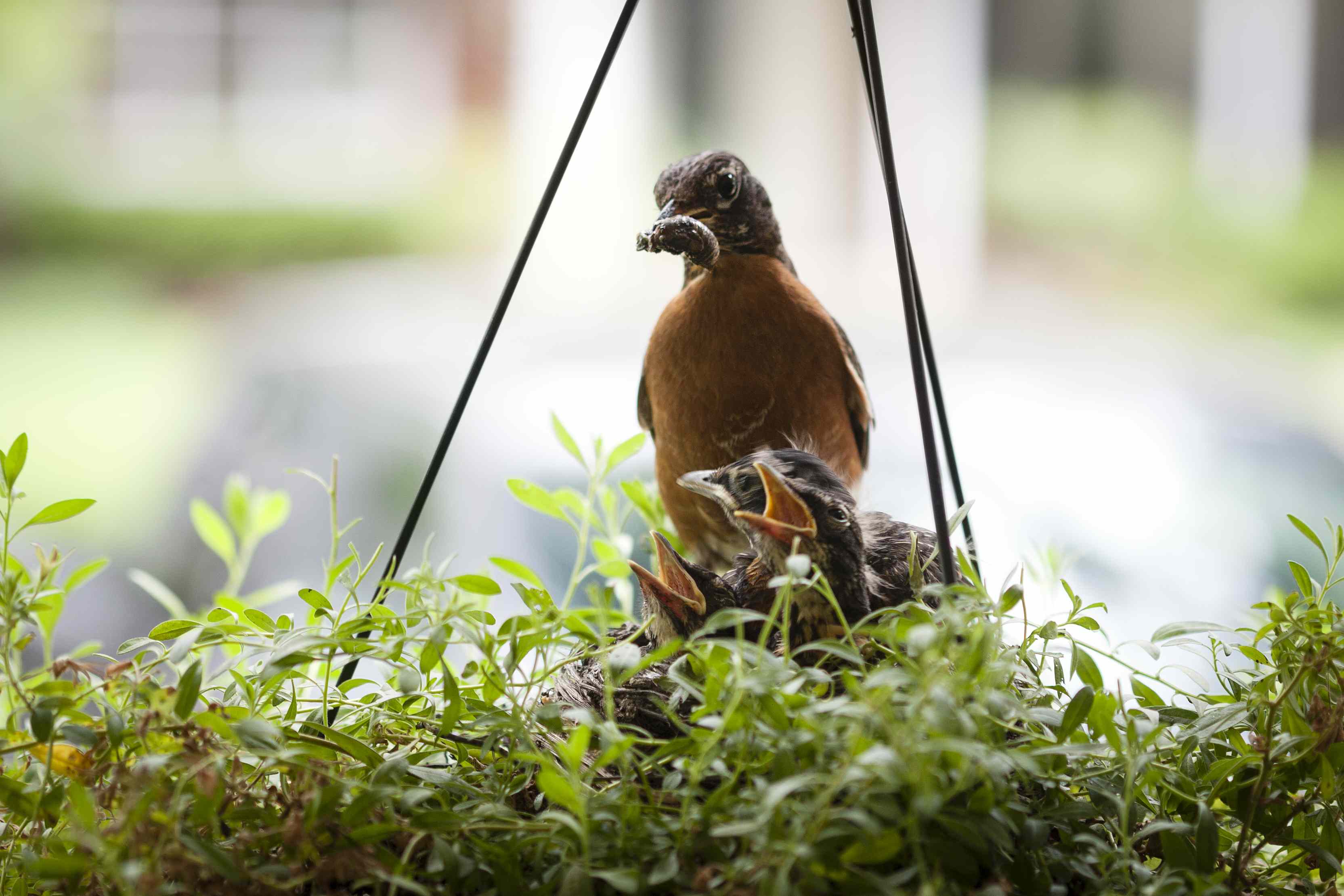
How To Tell If Birds Are Nesting In Your Hanging PlantsMary

As the saying goes, “nature finds a way.” And when it comes to nesting birds, sometimes that way might just include your gutter or downspout, flower pots, front door wreaths, and of course, hanging baskets. If you discover a bit of unexplained debris on your porch or patio under your hanging ferns or petunia-filled hanging baskets, it could be that a bird has decided to make itself a home there.
But how can you be sure, and what should you do if you discover a nest? Ahead, our best tips on how to tell if birds are nesting in your hanging plants—and what to do if a family has chosen your prized porch plants as its new roost.
Signs That A Bird Is Making A Nest In Your Hanging Baskets
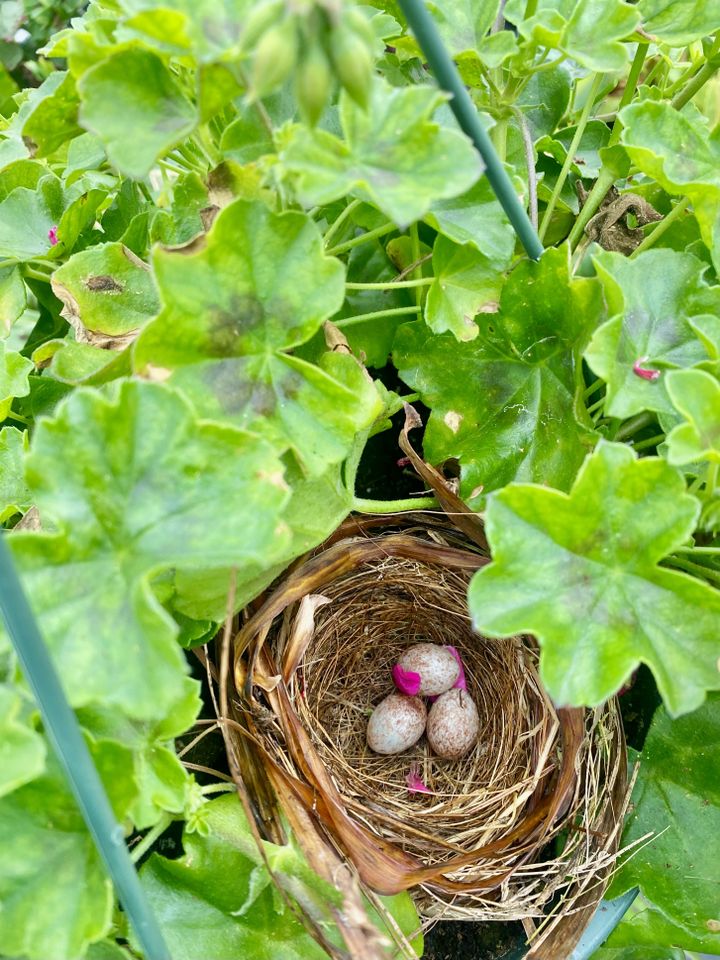
One of the first signs that a bird has chosen your hanging plants as a nesting site is increased activity on the porch or patio, usually in early spring. You’ll see more fly-bys and probably more bird droppings on the floor as they check out a future spot for their nest. Once a bird zeros in on its chosen spot, you may find grass clippings, twigs, or small feathers on the porch floor and in the plant as the bird begins building the nest.
Once the nest is built and egg-laying begins, birds may become more anxious or aggressive by chirping loudly or diving at you when you walk near the plant. Another sure sign is if a bird suddenly flies out of the greenery when you approach to groom or water the plant-filled basket.
What You Should Do If You Suspect A Bird Is Getting Ready To Build A Nest
If you suspect some bird reconnaissance, check the plant, and if there is no sign of nest building yet, there are some things you can do to gently suggest to the bird that it should move on and find another nesting site.
Add some metal, plastic, or bamboo bird spikes around the edges of the hanging basket to prevent birds from landing there. These can usually be removed once summer arrives and peak nesting season is over.
Hang a shiny wind chime near the plant. The motion, light reflection, and sound can help deter the birds from your plants. No wind chime? Use strips of aluminum foil, metallic streamers, or old CDs.
Soak some cotton balls in peppermint or lemon essential oil. Place them in the plant to repel birds. The scent will fade, so you may need to replace them every few days.
I Found A Nest, Now What Do I Do?
Congratulations! If it is springtime, you’ve just become the host of some cute new neighbors. Migratory birds and their nests are protected under the Migratory Bird Treaty Act (MBTA) in the United States, enforced by the U.S. Fish & Wildlife Service. It is illegal to move or destroy a nest that has eggs or young birds that are still dependent on the nest for survival. Some birds aren’t protected by federal law because of their invasive status. This includes house sparrows and European starlings. If you’re not an avid bird watcher, you should be sure you have identified the birds correctly before you take any action to remove a nest. If you have questions, it’s worth checking with your local wildlife agency before removing a nest.
Ideally, once a bird has built a nest and eggs have been laid, you should leave the hanging basket alone. Most songbirds leave the nest within 30 days. If you choose to water the plants, use a watering stake to prevent wetting the nest and avoid as much interaction with the birds as possible.
The Birds Are Gone, Now What?
Federal law generally does not protect most empty nests (raptor nests are an exception) once the birds have finished using them and no eggs or chicks are present. The nests can be removed, and you can resume your usual care and watering of the hanging basket.
Old nests can harbor parasites like mites and lice, as well as bacteria, and attract ants and wasps. When removing the nest, protect your hands by wearing gloves to avoid contamination from fecal matter, mold, mites, bacteria, or other parasites that may have infected the nest. Place the nest in a plastic bag before placing it in the trash. Or, add it to the compost pile where it will decompose naturally.
on Southern Living
Source: Nature