Dogs Show Human-Like Brain Activity When Resisting Temptation

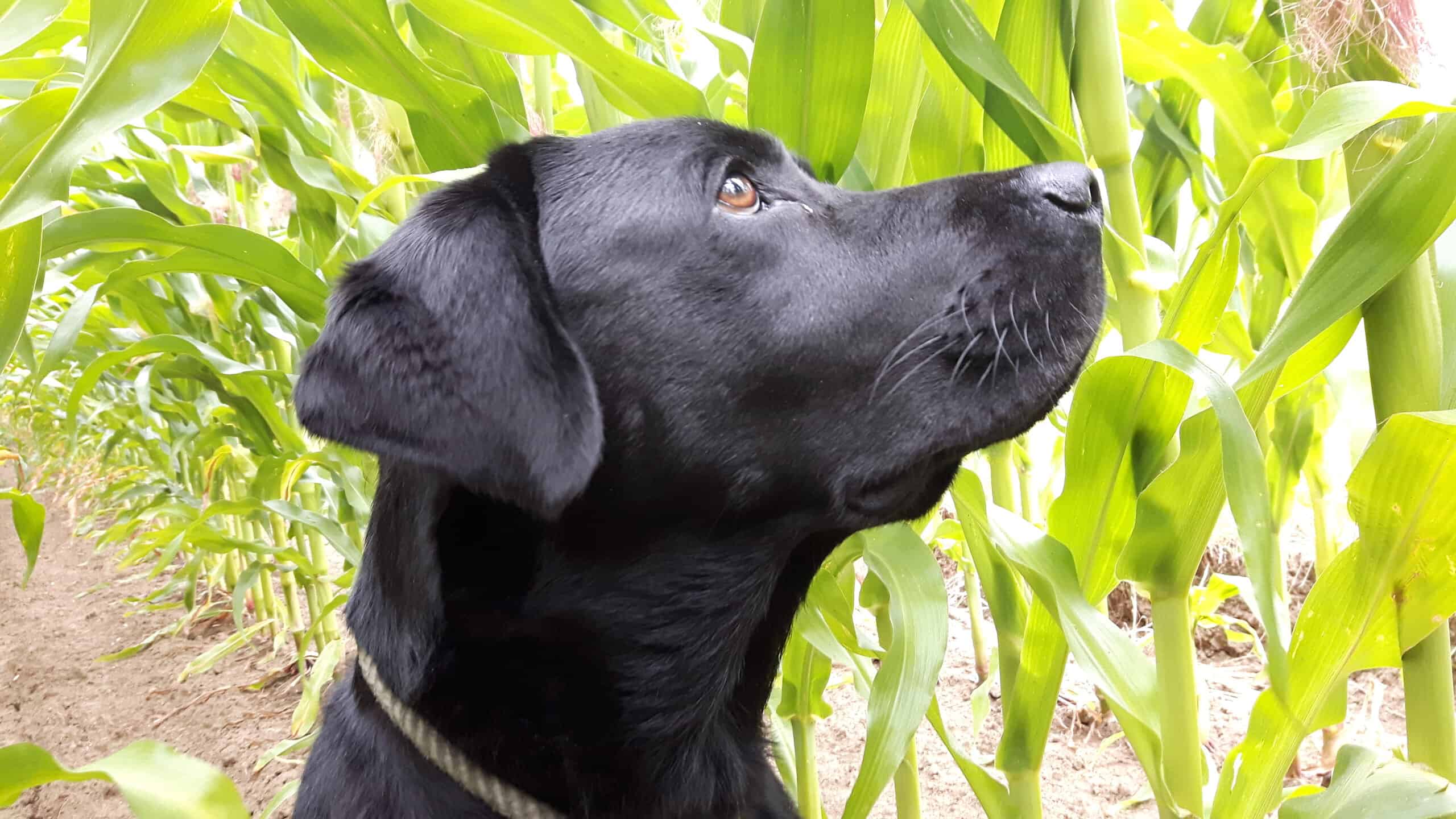
dog staring longingly at cornfield© iStock.com/Frankenvrij (© iStock.com/Frankenvrij)
Do dogs have self-control? New research from the Department of Ethology at ELTE and the HUN_REN Research Centre of Natural Sciences says yes.
Researchers discovered that when a dog is told “no” and changes its behavior, the pup’s brain shows activity that resembles the human neural signature of self-control.
Their findings were just published in the journal Animal Cognition.
The Details Behind the Study
Researchers studied 14 family dogs, placing six small sensors on each dog’s head with gel to run EEG testing. The sensors picked up the canine brain’s tiny electrical signals through the skin. No sensors were implanted inside the dog’s brain or body.
Once the sensors were in place, a treat was placed within reach of the dog. The dogs’ owners picked treats that they knew were favorites. Of the 14 dogs in the study, 12 got a treat, one got a toy, and one got both.
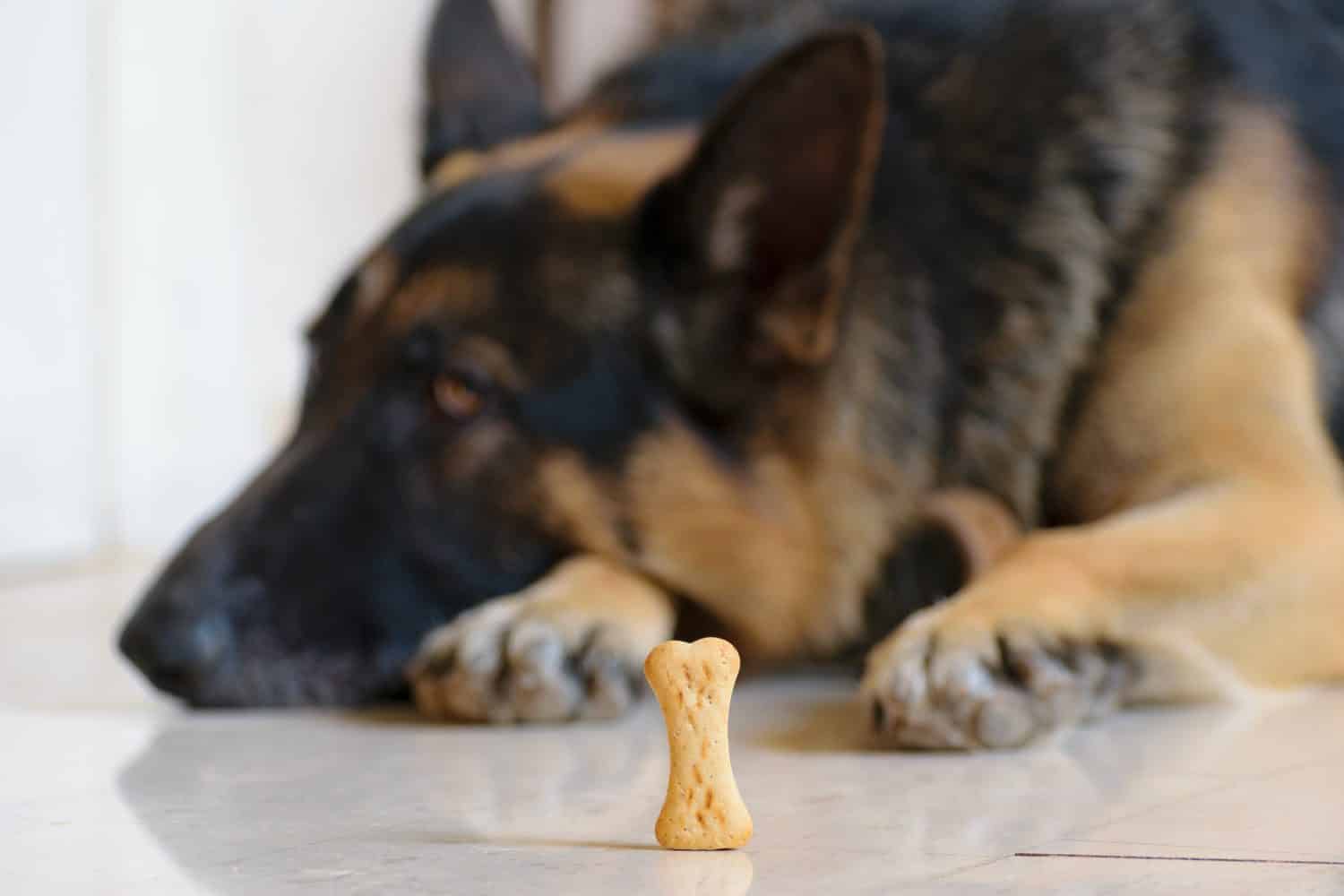
Each dog had a reward placed in front of it and was commanded to “wait” by its owner.©CoinUp/Shutterstock.com
With the treat in place, the dog’s owner gave a “wait” command, and researchers recorded the dog’s brain activity for about 30 seconds before the dog was allowed to take the treat. For the most part, each dog waited the full 30 seconds. There was one dog that grabbed its reward early, and researchers excluded those test results from the study.
What Is “Theta” and Why Does It Matter?
The sensors measured brain waves — rhythms of electrical activity. Brain waves vary throughout the day, rising and falling in steady rhythms. Scientists sort these different rhythms by speed and give each one a name.
Slow brain rhythms, called “theta,” produce four to eight beats per second. These cycles are measured in Hz, or hertz, the scientific unit for frequency. In humans, the theta activity that occurs in the frontal lobes is located at the front of the head, in the forehead region. That area is linked to self-control.
Dogs have brain structures similar to those of humans, with areas that match human frontal regions.
What the Study Found
“We measured 226 short EEG recordings, each around half a minute long, from 14 dogs who, for the duration of a recording, were either obeying a command or idle,” Ivaylo Borislavov Iotchev from the HUN-REN Research Centre of Natural Sciences, said in the news release announcing the findings.
Theta-range activity was higher when the dogs were waiting than when they were at rest. Just like in people, the rise in theta was strongest in the front middle of the head.
The dog’s frontal lobe activity increased when waiting for its reward.©Mary Swift/Shutterstock.com
“These data were then analyzed to see whether, within and across dogs, theta waves are more pronounced in recordings in which the animals were obeying the restraint command. The absence of such an effect would have suggested that dogs obey commands automatically. But what we observed does not support this interpretation — during self-control situations, we observed EEG activity resembling human theta in both frequency and localization,” Iotchev said in the news release.
What the Study Doesn’t Show
One important caveat is that the signals can’t be distinguished among different types of self-control, like attention, expecting a reward, and holding back. At most, the increase in theta indicates the dogs were mentally processing something, but the exact thing remains unclear.
The dogs in the study also presented a limitation. All 14 dogs were well-trained, the sample size was small, and each dog was recorded multiple times. The researchers agree it is too early to say how aware a dog is of its own restraint.
Why Does the Study Matter?
EEG studies are cheaper and easier to administer than the previous approach of using functional magnetic resonance imaging (fMRI) — a brain scan that shows which parts of the brain are active at any given time. Using the old methodology required dogs to lie completely still in a scanner, creating an artificial environment. EEG studies allow for more natural testing.
This study also raises awareness of studying canine frontal lobes, an area of the brain that hadn’t received much attention from researchers before. Most studies focused on rat brain frontal lobes, so this study expanded the understanding of how dogs’ brains function.
But the most important outcome was the implications of these findings for human health. Weak frontal-lobe function plays a role in ADHD and weight gain in people. “Dogs live and age faster than humans but move in the same environments and adapt to the same social and physical challenges,” Márta Gácsi, co-author and senior researcher at the Hungarian Research Network, said in the news release. “This means that developmental and age-related factors associated with pathological conditions can be examined more time-efficiently than in human populations.”
“The ability to measure the EEG correlates of frontal lobe involvement in dogs will allow us to investigate just how closely these conditions in dogs resemble their human counterparts and allow us to extrapolate better predictions for humans, too,” Anna Kis, co-author and a research fellow at the Hungarian Academy of Sciences, added in the same press release.
Source: Nature